


It is one of the most frustrating things to be wasting time applying eyeshadow only to find it disappearing into a crease or, worse still, seeing it settle on lines previously unknown to you.
And you know what it is like if you are a person with the hooded eye: smudging, smearing, where to put the shadow, where will it show.
It is a bit of a hassle at first, but after practising, applying eyeshadow to hooded eyes is rather a power move instead.
So let me go through it all: the place where to apply eyeshadow so it will last, the dos and don’ts, and we will end with the way to open up those fine, hooded eyes, as well as make them defined and turn out to be the naturally beautiful ones.
Rethinking the Eyeshadow “Crease” for Hooded Eyes
The crease is at the point that their eyelids crease in most people.
However, in case you have hooded eyes, that fold has the habit of concealing your lid when the eyes are open, and thus, the traditional placement will not work.
The point here is not to keep up with the crease- it is to make a new and different one above it.
Rather than setting your transition shade on your real crease line, fix your eyes on it without blinking and apply the mild brush to blend a matte-finished eyeshadow area a little bit on top of that crease.
This is a new location, which turns into your visual crease. It gives depth and volume to your eyes as well as makes sure that your work is not lost when your eyes are open.
At first, it may seem unusual to do it, but in time, it may become an unconscious thing.
Prepping the Lid to Prevent Creasing and Wrinkles
The best protection against creasing is a well-prepped eyelid.
The contents of your lids, whether oily or dry, product build-up, and perspiration are the number one contributors of shadow, causing the vanishing or smearing of shadow.
Begin by using a primer on your eyelid or some matte concealer. All you have to do is leave it and, in 30s or so, apply a small pinch of translucent powder on it when you are prone to greasy lids.
This will give a smooth base that will not pull or clump up your shadow.
Layering shimmer over a skin that is unevenly plain or poor skin that has not been primed is one of the reasons why eyeshadow can cause the eyelid to appear wrinkly. Once you know how to prep, your shadow blends bette,r regardless of your age and skin type.
Choosing the Right Eyeshadow Textures
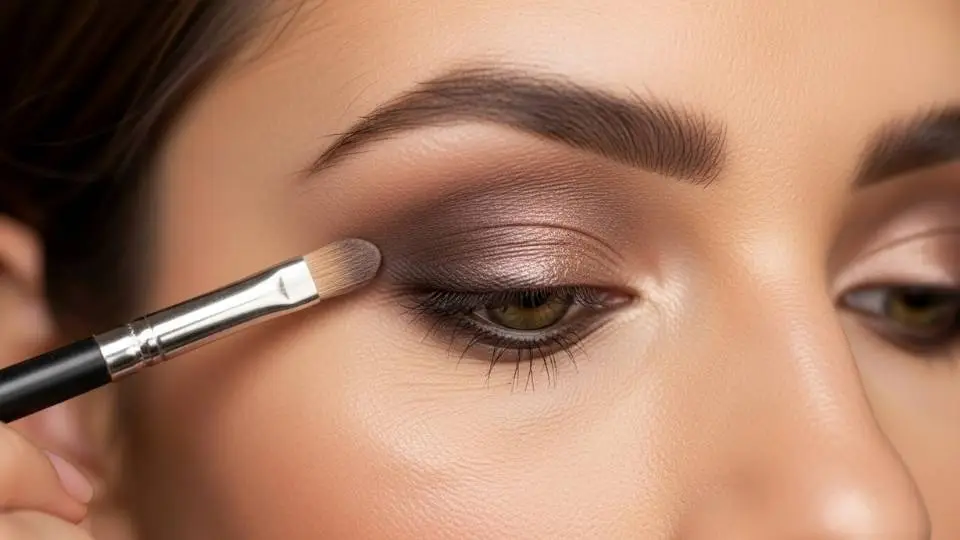
When it comes to the lids that are hooded, matte shadows should be your rescue. They can absorb light and allows them to help redefine depth without causing puffiness. Although shimmers are not restricted, the location counts.
To have a glow use:
- The hub of mobile lid
- Eye corners The cheekbones The corner of the mouth
- Hail line (subtly)
However, don t have shimmers in your crease or just above your crease as it usually highlights any creases or some texture.
Establishing Lift By Putting Shadow
Faking a lifted and open shape is one of the wittiest to wear hooded eyes to appear less hooded. The secret here is your outer corner and how you frame your lid.
Make your eyeshadow start simply above the crease (as mentioned above) and tug it a little higher to the end of your brow. That is, do not make it to bleed downwards because it will draw down your eyes too.
You want to concentrate the darker shades on the outer V sweep of your eye which is the corner where your upper lash line and your eye crease. That point can take the depth and drama without shutting your eyes.
Make your blending close and up. When you are too wide, or too low, you lose the illusion.
Eyeshadow Techniques for Hooded vs Non-Hooded Eyes
| Feature | Non-Hooded Eyes | Hooded Eyes (Recommended) |
|---|---|---|
| Crease Placement | In natural fold | Slightly above the fold |
| Shadow Finish | Any texture works | Matte or satin (shimmer placed smartly) |
| Blending Style | Standard windshield motion | Upward-focused, tight blending |
| Eyeliner Style | Winged liner with flick | Thin liner or smudged lash line |
| Common Mistake | Too much product buildup | Applying shadow too low, too thick |
A Word About Eyeliner
Hooded eyes may be a problem with eyeliner. Conventional heavy liners or super dramatic wings tend to end up beneath the crease- or perhaps worse on your upper lid.
Smart way would be as follows:
- It is better to define your eyes by tightlining the upper lash line using a pencil or shadow without obscuring it.
- Avoid using thick liquid liner which smears. Use gel or powder liner at the place of it.
- Should you want a wing at all, then make it with the eyes open, and small and turned just up; but not out.
- This maintains an appearance of eyes lifted up and does not drag its gaze down.
Blending Without Overdoing It
Blending does not imply erasing everything away. Hooded eyes need a soft diffusing: just in specific locations. The most frequent one? The brush will be giant and fluffy to apply pigment too broadly and end up with muddy or messy eyes.
Make use of a smaller blending brush. Gently use the transition shade in your brow bone area and external corner. Make the pigment toned down and fine, to the point that your definition does not disappear in the crease.
There should not be any harsh edges, yet one should not be over-massaging the shadow either.
What to Avoid With Hooded Eyes
Hooded eyes spring a couple of habits that can turn against you:
- It would be preferable not to use shadow with closed eyes all the time. An eyes-open view will always help answer what will be seen.
- Do not apply shimmer on the whole lid. This adds the appearance to lids of either being puffier or more wrinkled when facing the light at the wrong angle.
- Pass on dense eyeliner throughout the lid. It makes the visible space shorter, and it is able to make the eye smaller.
Avoiding all these pitfalls makes you look fresher, cleaner, and flattering.
Making Hooded Eyes Stand Out Naturally
To accentuate hooded eyes, you should not load tonnes of colour there, that is, on the contrary, should work the light and the shadows to make the eyes open.
A highlighter in the inner corner, glitter eyeshadow in the centre and raised matte shadows towards the outer third of the eye do magic.
When you go out at night, you can thicken the appearance, although the same principle applies: soften towards the top, make the shimmer in the areas, where it does not crease, and never forget about the primer. The positioning of even mascara counts.
Concentrate attention on the next angle of the lashes, particularly the inner and outer corner of the eyes which will make the eyes look open and lifted.
Why Does Eyeshadow Crease on Hooded Eyes?
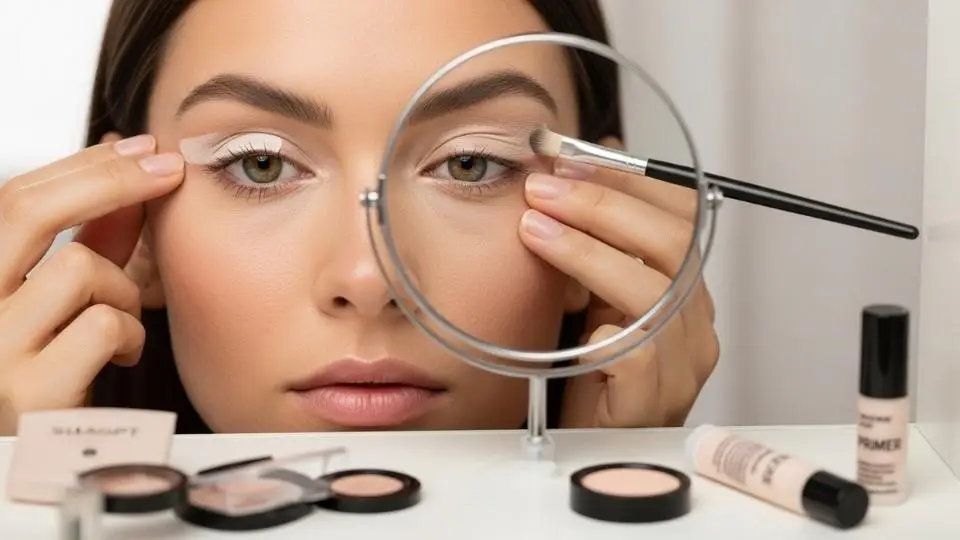
Creasing occurs when your eyeshadow is over-worn and the product under eyeshadow melted and disintegrated it.
The issues with hooded eyes are that the eyelids roll over and create persistent friction, this happens when you blink or when you smile.
The result? Smears, patches and pigments that settle in fine lines. No matter how good products you use, the wrong order or texture may make your look sabotaged.
This is the reason why it is important to apply thinly, wait until each layer dries and apply long-wear formulas. In this case, still, less is more.
Always respect primer. Other individuals believe it acts as an extra, but when you have hooded eyes, then it is the initial line of defense against the look of being tired and having wrinkles by making the skin smooth and catching onto pigment in a more cohesive fashion.
How to Blend Like a Pro (Even with Limited Space)
The shortage of canvas is one of the problems of hooded eyes. You do not have all of your lid space on show when you open your eyes unlike in almond or deep-set eyes. Blending feels like a restriction, which in fact is not true; all you have to do is blend intelligently.
Role of the one-third rule to cover the lid with various shades of color:
- Third inner: gentle glistening or light matte to brighten up
- Middle third- Your primary color (employ it smoothly)
- Outer third: the lowest note, which was always lifted upwards
Such placement prohibits the overloading of the lid and maintains the shape organized.
Do not smear too much upon the sides or below the eye expect when working on a smoky style. Hooded eyes look best at accuracy and not drama-even in applying depth.
Why Your Eyelids Might Look Wrinkly With Eyeshadow
I can relate to wrinkly or lumpy eyelids after shadowing, but age is not an issue, texture is the problem, as well as application.
This is what brings it about:
- Applying shimmery shadows as they are, unprimed on wrinkled lids
- Using excess amount in one go
- Making up a smoothers base
- Failing to give damp skin the time to dry up before applying makeup around the eye area
To solve it, it is always necessary to allow your eye cream or SPF to set 10-15 minutes. After that prep with matte primer or powder. Both cream or powder shadow can be used, though they have to be light and non-creasy.
Small Things That Make Hooded Eyes More Attractive
To make eyes look lifted and awake you do not need dramatic cut creases or heavy liners. As a matter of fact, such tricks may become counterproductive.
These are some alternatives:
- Curl lashes and as mascara, put it on exclusively on the far-flung corners. This has the effect of bringing the eye out and lifting up.
- Apply a matte or satin bit of bright color in the inner third of your lid and at the line of your waterline. It brings transparency on the spot.
- Highlight the brow bone, but don t go so low, only below the arch. This gives it more up lift without pulling the lid space down.
- These tricks involve the use of light and shadows to contour your eye naturally- that is, no need to apply too much makeup.
Key Don’ts When Working With Hooded Eyes
It might seem that you can enhance your appearance ten times by avoiding some habits. These are the largest of them:
Do not keep your eyes shut throughout the application. When you have your eyes relaxed, you must observe where the product would be found.
Not shimmer in the crease. It creates undesired sparkles on puffier parts.
Never wing thick eyeliner beyond the crevice of the eyelid. When it folds or is smudged, it will give the eyes a more hooded appearance.
Do not make use of huge brushes. They eliminate any definition and squirm your position.
Don not forget to put cream shadows. Even the worn ones will benefit some powder to fix the colour.
Best Types of Eyeshadows for Hooded Eyes
| Eyeshadow Type | Works for Hooded Eyes? | Notes |
|---|---|---|
| Matte Powder | ✅ Yes | Great for crease definition and outer corner depth |
| Satin Powder | ✅ Yes | Adds dimension without shimmer overload |
| Cream Shadow | ⚠️ Sometimes | Only use if long-wear, and always set it with powder |
| Liquid Glitter | ❌ No | Easily creases and transfers to upper lid |
| Shimmer Powder | ✅ With caution | Use only on lid center or inner corner—not in the crease |
My Opinion
Hooded eyes can be a tough girl to understand but it does not hold you back, rather it just gives leanings to being smarter about makeup.
When you finally realize you should not be like others and want to adjust the technique to your body shape everything becomes clear.
Whether it was improved blending, proper decision making in regard to the right shadows and not overloading in terms of textures, it is elevation over exaggeration. You never are trying to hide the hood, you are just getting around it, graciously.
The next time you look in the mirror open you eyes all the way and appreciate that your shadow is in its perfect position and right where you want it to be: out there, positively flattering, crease-free.