


Big hair may be a curse and a gift. In as much as it gives volume and holds styles gracefully, it is quite demanding, particularly in braiding. Admittedly, when you struggle with your strands to make a good plait without making it too tight or turning everything into a mess, you are not the only one.
A lot of us who have thick locks are unable to find out the braiding styles that can be cool and at the same time gentle. In this tutorial we will teach you how to braid thick hair without pulling. In order to get to a neat braid, we will concentrate on practical skills, clever preparation, and good hair rules. All that is needed is some patience and a certain approach; no salon skills are necessary.
Thick Hair Requires TLC: The Reasons Behind Struggling
The reality of the tutorials when they come to braiding thick hair is not as easy as it appears. The thickness, density and weight of the hair imply more pressure on the scalp in the event of wrong treatment. That may result in pulling, breaking, and even a headache. The goal? Having clean and long lasting braids that are not painful and damaging. It is quite possible, but the first thing you need to know is about what your hair requires.
Step One: Prep Right
You must take care of your hair correctly first before you consider braiding. This is not to be missed—what precedes the braid has its impact on the ease of the process, and on the comfort of the scalp after the fact.
Comb and/or Brush Daintily
Choose a wide-tooth comb or a thick hair detangling brush. Begin at the most elementary ends and proceed to the higher. Hurried knots only cause unneeded tugging which may even annoy your head before you even start.
Apply the Appropriate Products
A light spray-on conditioner or leave-in conditioner will help make it easy to section and reduce friction. A small amount of the product does not go far. Avoid pore-clogging silicones or waxes which might accumulate over time.
Condition Your Ends
Your ends get dry at some point during braiding and they should be moisturized. Leave a couple of drops of natural oil—such as argan, grapeseed, or coconut oil—on ends before styling.
Everything is Sectioning
You do not need to do all the hair at a time. Actually, the worse, the better you not. Divide your hair into four to six parts with the help of clips. Do a piece at a time. This reduces awkwardness and makes you maintain the braid without having to pull hard on it.
Selecting the Suitable Braid for Your Hair Type
Braids are not equal. On thick hair, a hairstyle that does not entail tight combing on the head but still keeps its shape is what is aimed. Some marvelous choices are these:
Loose Three-Strand Braid
The traditional. Begin one-third of the way down your length as opposed to near the roots. It appears relaxed and avoids tension of roots.
Dutch Braid (On Top)
This braid rests on the top of the hair and makes it appear fuller. Do not pull at all firmly when weaving. This makes an attractive form which does not overstretch your roots.
Rope Braid
Two parts twisted individually and looped together. It is fast, beautiful, and an excellent choice when you are too busy.
Box Braids (Modified)
If you are a fan of protective styles, chunkier and bigger box braids should be considered as opposed to very small ones. Apply synthetic hair minimally in order to cut on weight.
Crown Braid or Halo Braid
These are also beautiful and do not need scalp-tight braiding and work well at special events. One thing: the wrap has to be pinned and loose, and not heavy with tension.
Technique Secret: No-Pain Braids
1. Never Start at the Root When You Don’t Have To
A braid does not need to start at your crown. Begin with a ponytail, between the middle and the crown or slightly below it to prevent the strain. It is particularly useful when one is new with braiding.
2. Braid Holding Your Hair as You Brush It
Do not pull hair out away from the head. Rather, braid nearer to the scalp and take the fall of your hair. It does not feel as tight and it appears more natural.
3. Stop and Check Your Tension Regularly
When it becomes painful or too tight—stop. Get the last few weaves loose, readjust in grips, and go on. Based on a braid, your head should not be sore.
4. Keep It Light
If you use an elastic, make it soft with no snags, and a satin tie works well, too. Stay away from conventional rubber bands—these yank, catch, and weaken hair.
What of Products? What Helps and What Doesn’t. What Hurts
What is Good Stuff?
-
Leave-in moisturizing conditioners are meant to make it more soft and stratify.
-
Natural oils such as coconut, jojoba, or olive to provide slip.
-
Curl-defining styling creams or anti-frizz (curly girls, you will be a fan of these).
What Not to Do:
-
Dense, large gels which thicken hair or make it flaky.
-
Slippery sprays or mousse that is high on alcohol content—these will render braiding difficult, not easy.
-
Anything that has drying sulfates, which can dry out your scalp.
Tugging During Sleeping Prevention
What is one of the forgotten tugging culprits? Your pillowcase. Cotton has the effect of causing friction and loosening of your braid or catching up strands as you are asleep. The difference is enormous—three (3) satin or silk pillowcases. In case you are having a long braid, you can use a satin bonnet or wrap it with a silk scarf.
And you may braid loosely, or like a pineapple, at night (tied on the top of your head). These styles limit movement and friction and they save your look the following day.
DIY Braiding the Other Hand: Do It Yourself Without the Arm Ache
Second Mirror Setup
Set up one mirror behind your back when you are dealing with styles such as Dutch and French braids. It reduces a lot of guesswork and separation becomes easy.
Sit Comfortably
Take the help of a chair balanced against your back and a mirror arrangement in front of you. Chair position counts—you do not want to hurt your back and your arms in the process of striving to avoid tension in your head.
Take Breaks
When more than 20 minutes are needed, take a break. Your hands and your scalp will appreciate you.
Easy Methods on Unbraiding Without Breakage
It is no good snapping the braid asunder at night. This is the way breakage occurs. Instead:
-
Add a couple of drops of oil on your fingers.
-
Begin with the ends.
-
Slowly unravel.
After using it, brush it out with a wide-tooth comb to get rid of knots and proceed with conditioner where necessary.
Not Falling into the Damage Trap
No Everyday Braids
Your head should have breathing time. Tight braids during a day (it can be even cute) can cause thinning or traction alopecia. Change your style after every couple of days.
Do Not Braid Damp Hair
Braiding wet hair will stretch it more and then it will snap. Now, when you need some grip, the hair should be just a little wet—as opposed to soaking wet.
Watch Your Accessories
They are the pitiless elastics. Seek a spiral tie, a silk scrunchie, or a satin-covered band. The condition of your hair is worth it.
Ways to Tie Braids
Having got your thick hair to be braided without pulling, you now need to find a reasonable way to keep your braids in place without tightening them so much that they are stressful to the head. The most widespread myth is that tighter braids wear longer: they might remain intact, but in the long run, they are very likely to be torn or result in having tension alopecia. You aren’t really requiring pressure—you need grip.
Hairpins for thick or rough hair, such as U-type hairpins or several inches long bobby pins, will keep the braid flat. Additionally, a pinch of styling cream or a wax stick at the root of the hair can stabilize the braid even before you start. What other inside tip will you give me? After the braid is done, mist the hairs gently with a flexible-hold hairspray. This gives rigidity without hardening the fibers.
Managing Scalp Tension and Avoiding Damage
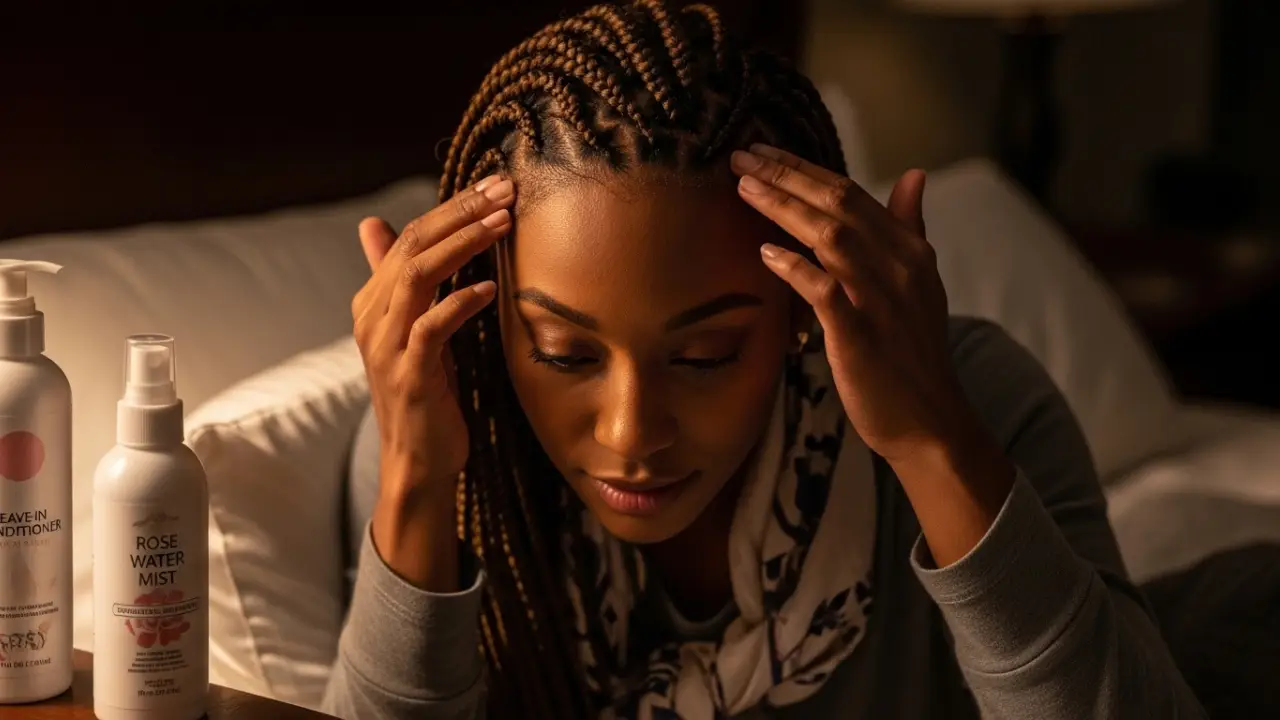
Tension-related damages are not only painful, they are accumulative. Skin-retracting pulling styles such as replicated styles can create traction alopecia, especially at the hairline. Just checking the tension of your braid is an option you can take, by tapping your scalp against the hairline. When it is sore, then the braid is tight.
Keep changing your parting when you braid. This lessens the occurrence of repetitive strain in a part. Women who frequently style their hair in middle parts should occasionally opt for side parts. In case you are a fan of tight box braids or cornrows, then—hairstyles permitting—take a few weeks of relaxation time before re-trimming on the same pattern. It is imperative to give your hair and scalp a break.
Sleeping with Braided Thick Hair
Your braid routine can be made or not by nighttime care. Moving the pillow on cotton pillowcases will create frizz and loss of moisture. Rather, you need to put a satin or silk scarf around your braids, or a satin bonnet. A silk pillowcase is an added security to unstable sleepers.
The other trick that can be done at night is re-moisturizing at bedtime. Spritz very lightly through your braids and concentrate on the ends with a leave-in conditioner or rose water mixture. Then wrap. This keeps the strands fed and assists your style to be longer-lasting.
Washing Braids Without Retying Everything
There are times that braids appear so good yet the roots become dry or even flat. In case you do not want to remake the whole braid, pay attention to spot-fixing. As an example, in case the crown has turned out puffy, braid only that part, use a small amount of water-based gel or cream, and re-do it.
To restore that freshly braided look, you can also brush some edges or put on some mousse just on top. To re-shape, use a diffuser with low heat. To treat the scalp, use a cotton wipe or nozzle bottle and put some light oils (jojoba or tea tree mixes) on itches or places that are dry.
Best Hairstyles on Thick Hair
Some types of braids go well with thick hair. French and Dutch braids are the styles that work wonderfully when you have volume in your hair—they will take advantage of the existing body. The crown and halo styles appear more voluminous and long on thick textures as well.
Jumbo twists, box braids, even braid-outs are all protective styles that work well. Ensure simply that the parts are not so huge and must be equally separated. Thick locks may easily get tangled; large portions may result in an uneven braid or a slip.
Want volume? Pancake your braids.
After braiding, loosely tug on the loops to increase the braid. This provides a casual, romantic impression with an easy flow of the thickness without any additional strains.
Selecting of Tools and Accessories
Not every comb and tie are made the same. In detangling, never use narrow-tooth combs or brushes with hard bristles, but rather wide-tooth combs or detangling brushes. Do not use fine-tooth combs unless you are parting. In the case of elastics, avoid anything that closes with metal or rubber. Rather than these, apply soft stretch bands or ties wrapped in silk so as to get away with the pulling.
Padded clip grips, spiral pins, and even magnet-accessories (yes, they are!) can help you securely fix braids without pain and stylize them. The point is to use the tools that suit the density and texture of your hair.
The Best Method to Perform Unbraiding
Once you have put your braids in, it is time to take them out after a few days or weeks. However, pulling or speeding up this process has the potential of undoing all of your positive hair habits.
Tease out the braids with your fingers or the latter end of a rat-tail comb, a bit at a time, beginning at the ends. Use leave-in conditioner or detangling spray, then run through before the hair has been unraveled, to reduce friction.
Do it bit by bit, and as a couple of plaits are loosened, rub them loose then twitch them over so they are easy to work at as you drop more of them open. And, last but not least, deep conditioning always helps clean up braided hair, no matter how well shielded it is.
Hair Braiding Thick Hair Do and Don’ts
Myth busting time:
To begin with, no one should think that more product is always good, as excessive cream or oil can make you slip and braiding more difficult.
Second, never miss preparation. Detangling-detangling prevents knots or breaking of hair.
In addition, do not leave braids too long. Matt and severe damage can occur when you leave styles to supersede (particularly when buildup of products occurs). Pay attention to your head—anything rumbling up there can give you an indication that a hairstyle has passed its expiration day.
Finally, do not pull your line of hair to be smooth. Borders are easy to break. A toothbrush or small edge brush and a little edge control gel are going to be used to lay them down without pulling them into the braid.
Natural Oils That Aid Braid Lifespan and Comfort
Underrated when it comes to braid maintenance are oils.
-
Argan oil is a thinning oil—it gives you shine, not weight.
-
Jojoba oil, often used in Bantu knots, has a similar quality to the sebum of the scalp, making it excellent for dry scalp behind braids.
-
Tea tree oil deters itching and clogs, particularly when diluted.
Massage oils on your scalp every couple of days when you still have your braids on. It not only soothes but also moisturizes the follicles and decreases flaking.
As an end, a dab of coconut oil helps in locking moisture—particularly in dry seasons.
Conclusion
It is not only about the techniques at the end of the day, but when you braid your thick hair you have to respect the volume and texture of your hair, listen to your scalp, work with the volume, not against it. Braids may be bold, sleek, soft, or fierce. The most important point is that they make you feel good—not only look good.
Therefore, whenever you are going to braid hair, take your time the next time you pick a bit of hair. Breathe. Brush gently. Not to mention—it is not a race but a rhythm.