


Just imagine, on waking up, you realize that your skin has become dry and still greasy.
You have spots which are flat and dry on your cheeks, but you have a glistening forehead, and your nose looks like you have just done a marathon.
Sound familiar? It can be a challenge because having combination skin is a complex mix that can make it difficult for anyone to know when to apply which product.
Whether you have been applying layers of oily-skin products everywhere and still wondering about why your cheeks are so dry, or you have been covering your face with heavy moisturizers and the result is a greasy T-zone, this guide is what you want.
I will help you build a morning routine that’s not just “influencer-friendly” but truly effective, dermatologist-aligned, and designed for real-life combination skin.
We are going to make your mornings easier, a step at a time.
Understanding Combination Skin
In the course of not even going under bottles and serums, it is better to know what you are dealing with. Combination skin usually refers to the following:
-
Oily or acne-prone in the T-zone (forehead, nose, chin)
-
Dry, normal, or even sensitive on the cheeks and jawline
-
Fluctuations based on weather, hormones, or stress
Now, in this is the twist, most people possess a type of mixture skin, and it is never permanent.
Depending on the seasons, it can be oilier during summer or drier during winter, or even depending on your lifestyle.
To make things even more out of control, over-cleansing or incorrect product use only contributes to this set of errors by placing your skin into a yo-yo of imbalances.
Why Morning Skincare Matters (Especially for Combo Skin)

Most individuals pay so much attention to their night routine and predict that skincare in the morning is optional.
However, when you are reluctant or quick to leave out or go through your morning routine, you are exposing your skin to air pollution, UV rays, free radicals, and other environmental stressors, which aggravate the aging process as well as cause excess oil or irritation.
The morning skin care emphasizes on:
-
Gentle cleansing of overnight sweat/oil deposit.
-
Moisturization of dysfunctional skin
-
Healthy Balance process
-
Prosperity of oily spots
-
Saving your skin against the sun and pollution.
In short, the strategy of your daily protection is to have a good morning.
The Ultimate Step-by-Step Morning Routine for Combination Skin
We are going to simplify your morning skincare into five key steps that are smart and result-oriented.
Step 1: Gentle Cleanser
Begin with a low-foaming cleanser that is pH-balanced and removes sweat and other excess oil in the T-zone, yet does not remove the drying region of your face.
Look for:
-
Ceramides (to defend the barrier)
-
Niacinamide (to regulate oil)
-
Exfoliating acids, such as LHA or salicylic acid (used at very low doses)
Avoid:
- Sulfates or soap-based cleansers
- Coficamas or the rough things of the morning
- CeraVe Foaming Facial Cleanser or La Roche-Posay Toleriane Cleanser are examples.
Step 2: Toner (Optional But Beneficial)
Many people misunderstand toners. In the case of the combo skin, one should not focus on having it tightened up or dried out, as in such a case, it comes to rebalancing it and preparing the skin to enhance the performance of the products.
Take an alcohol-free toner that has:
- Sedating: green tea or chamomile
- Light hydration with glycerin or hyaluronic acid
- Witch hazel (alcohol-free) for mild pore tightening
If your T-zone gets greasier, then apply this only at these places and not over your entire face.
Pro Tip: If your cleanser already provides balanced skin, you can jump over this step.
Step 3: Serum
Here is where they can get targeted. Serums are potent solutions that set to work on bells-and-whistles on the skin, such as banishing oiliness, loss of lustre, or leaving skin hydrated, and have combo skin, you need multi-taskers.
Best things to seek:
- Niacinamide: Minimizes pores, reduces oil, strengthens barrier
- Vitamin C: Brightens and protects against sun damage
- Hyaluronic acid: Keeps moisture and does not make the skin greasy
You do not have to use a variety of serums.
One of those, well-mixed with 2-3 of the above ingredients, will be wonderful.
Step 4: Lightweight Moisturizer
This cannot be compromised even with oily skin. The secret lies in settling on a gel-cream formulation that moisturizes the dry spots on your skin but does not saturate your T-zone.
Ideal ingredients:
-
Glycerin and squalane for hydration
-
Panthenol (vitamin B5) for soothing
-
Oil-free or non-comedogenic products
You should not use heavy creams or even thick balms in the morning unless your skin is so dry or it is the winter season.
Example: Neutrogena Hydro boost water gel or first aid beauty ultra repair oil-control moisturizer
Step 5: Broad-Spectrum Sunscreen (SPF 30 or higher)
Regardless of what type of skin you possess, sunscreen is your anti-aging product, end of story. To treat combination skin, you will desire a sunscreen that is:
- Is matte or semi-matte paint
- Does not provide casts that are white in color
- It isn’t too greasy or heavy
Choose between:
- Mineral (zinc oxide, titanium dioxide): it is excellent, especially with sensitive combo skin
- Chemical (avobenzone, octinoxate): less obvious, more makeup-friendly
- EltaMD/UV Clear SPF 46 or La Roche-Posay/Anthelios Mineral SPF 50
Morning Skincare Schedule (For Combo Skin)
| Time | Step | Product Type | Notes |
|---|---|---|---|
| 7:00 AM | Cleanser | Gel or foam | Avoid over-cleansing |
| 7:03 AM | Toner (optional) | Hydrating & alcohol-free | Skip if not needed |
| 7:05 AM | Serum | Niacinamide/Vitamin C | Let it absorb (1–2 minutes) |
| 7:08 AM | Moisturizer | Lightweight, gel-based | Apply more on dry areas |
| 7:10 AM | Sunscreen | SPF 30+ | Final and essential step |
This schedule ensures your skin stays fresh, protected, and balanced all day.
Balancing Oily and Dry Areas in the Same Routine
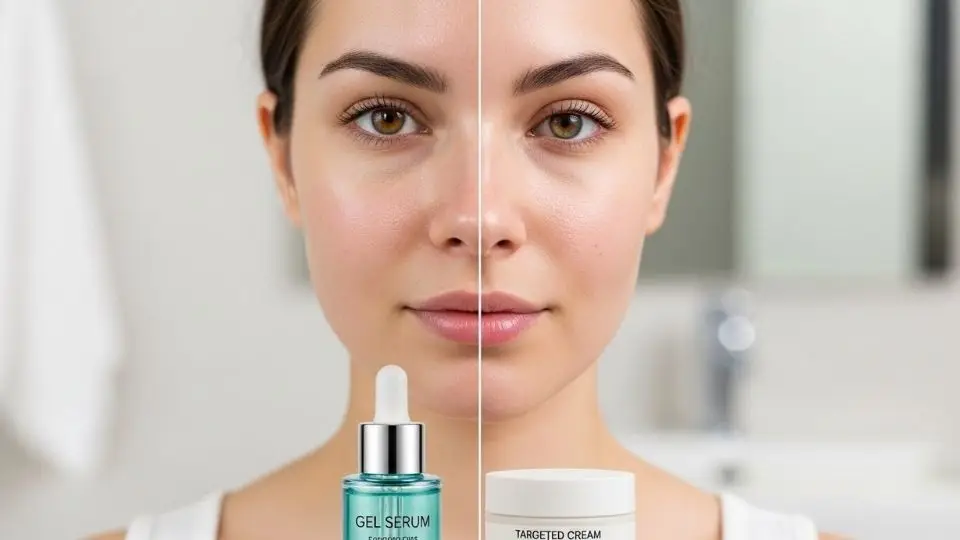
The most difficult thing about combination skin is that one has two (or even more) types of skin at the same time, and treating them as equals can frequently have the wrong results.
How then do you cope with this split personality skin?
1. Treat zones individually
Apply products depending on their requirement.
For example: Apply a mattifying serum on the T-zone.
Extra moisture on cheeks and jawline.
2. Don’t double cleanse in the morning
It is not needed and may increase dryness. Only do a single soft cleanse until you have heavy SPF in your overnight layers.
3. Blotting is smarter than over-cleansing
In case your skin gets oily in the middle of the morning, concern yourself with blotting papers or a splash of water. Never use rough cleaning twice a day unless your skin is acne-prone.
4. Product texture matters
Apply products that are lightweight and do not leave behind. The use of gel creams, fluid serums, and hybrid SPF can work well on the mixed-skin areas.
Ingredients to Use vs. Ingredients to Avoid (For Combination Skin)
To fine-tune your morning skincare, ingredient awareness is key. Let’s separate the skin saviors from the sneaky saboteurs:
✅ Best Ingredients for Combination Skin
| Ingredient | Benefit |
|---|---|
| Niacinamide | Controls oil, minimizes pores |
| Hyaluronic Acid | Hydrates without clogging |
| Ceramides | Strengthens the skin barrier |
| Green Tea | Calms redness, mild antioxidant |
| Zinc Oxide | Oil-absorbing SPF mineral |
| Vitamin C | Brightens, protects from pollution |
| Ingredient | Why to Avoid |
|---|---|
| Alcohol-heavy toners | Can over-dry cheeks, inflame T-zone |
| Fragrance | Potential irritant |
| Harsh acids in AM | Salicylic, glycolic in high % |
| Coconut oil | Comedogenic for oily zones |
| Thick occlusives (AM) | Can trap sweat/oil during the day |
Seasonal Adjustments for Combination Skin
During changing weather, your skin has different requirements. Using the same products all year round may result in dryness or oiliness, which is bad depending on the season.
🌞 Summer Skincare Shifts
Apply oily cleansers with gel-control
Choose the anti-shine and mattifying SPF with the finish
Less is more: you may want to avoid moisturizer when SPF is moisturizing
❄️ Winter Skincare Shifts
Change to rich cleaners or milk-based products
Exfoliate your moisturizer with a hydrating serum
Skip SPF when it is sunny
🍂 Fall & 🌸 Spring
Transitional routines: make it week to week
Take serums that block barrier repair with niacinamide and ceramides
I would also mention hydration by adding a facial mist without building creams
Common Mistakes to Avoid
Most of the skincare frustrations are not about bad products, but bad habits. This is what to cease immediately:
1. Using the same product all over your face
A combination skin lives best when customized care is used, not one-size-fits-all products.
2. Overloading on activities
Vitamin C, salicylic acid, glycolic acid, and retinol applied excessively can disorient and irritate your skin.
3. Skipping sunscreen because of oiliness
Your best friend is an SPF in matte. Lack of use of sunscreen, oil, and sun damage.
4. Moisturize only dry areas
Even oil-prone areas require moisturizing; simply apply lighter layers or area-by-area application.
5. Switching products too frequently
It would take 4-6 weeks before you can make any decision on whether the product works or not. This alternation fiddles with the balance of your skin.
How to Layer Products Correctly (For Morning Combo Skin Routine)
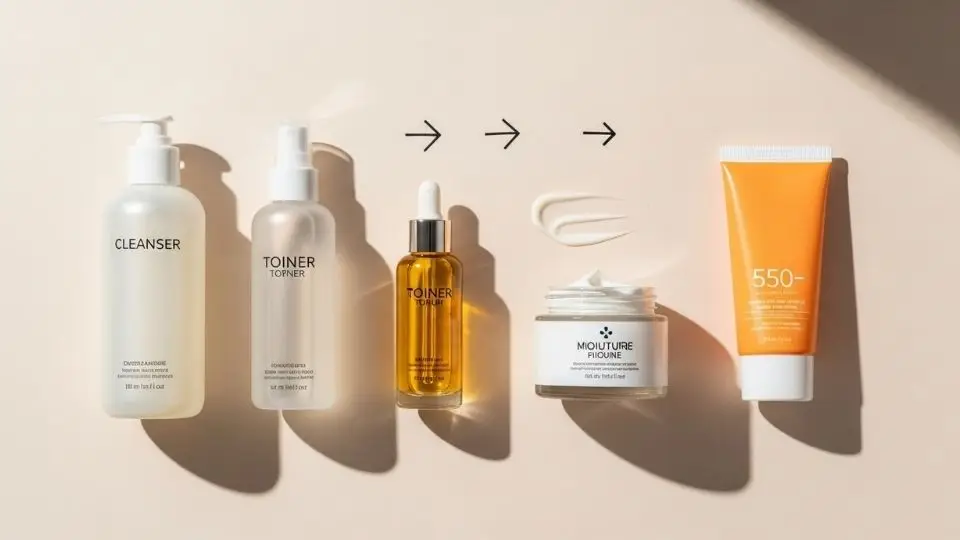
You’ve got the products. But are you layering them the right way? Here’s how to apply your skincare for best absorption and results:
Correct Order:
-
Cleanser
-
Toner (if using)
-
Serum
-
Moisturizer
-
Sunscreen
Layering Tips:
- Move in order of least to thick consistency
- Let each layer absorb (30–60 seconds) before applying the next
- Do not combine oil-based serum with water serum in one layer
- Do not put sunscreen beneath a moisturizer topping it up always
Minimalist Morning Routine (When You’re Rushing)
There are mornings you do not have five steps. This is your super-short, but not zero, skincare routine when you are in a rush but do not want to miss it altogether:
- Cleanse (or otherwise rinse with water) if the skin feels dirty.
- Dermatological medicine (moisturizing serum) (niacinamide or hyaluronic acid)
- Moisturizer SPF combo helps you to save a step!
Use a tinted SPF to smooth out the skin texture and forego makeup
Morning Skincare for Makeup Wearers
In case you use makeup, then your foundation is your morning skincare. The incorrect product will cause your foundation to slip over or pill.
Tips:
- Select liquid, water-absorptive moisturizers
- Primer is necessary only in exceptional cases, and many sunscreens do serve as primers.
- Do not apply products containing a lot of silicone after each other (causes pilling)
Bonus: An excellent morning routine eliminates the necessity of a strong foundation at all.
When to See a Dermatologist
There is no regular beauty regimen that can replace professional treatment of your skin when it is in trouble. When:
- You are not getting any results from over-the-counter products on your breakouts
- You have skin that turns red unexplainably or blisters. You think it is rosacea or acne caused by hormones
- Your skin is always tight or causing a response when hydrating it
- Derms are allowed to prescribe personalized topicals or perfect your product regimen.
There are moments when a single prescription helps to find an easy way out of months of misunderstanding.
FAQs
Q1: Can I exfoliate in the morning?
A: Yes, not every day, however. Only 2-3 times a week with moderate AHAs or BHAs, and do not forget sunscreen afterward.
Q2: Should I double cleanse in the morning?
A: It is not essential except when one has heavy overnight products or very oily skin.
Q3: Can I use facial oils in the morning?
A: Only when the skin is dehydrated and in cold weather. This much, and only as a last thing after moisturizer.
Q4: Can I use retinol in the morning?
A: It makes you sensitive to the sun when you avoid retinol. Play it safe by going with PM.
My Opinion
Your AM skincare does not have to include multifaceted steps instead it should be discriminating and regular.
Rather than following along with the influencers or changing products every week, listen to your skin and use clever layering, correct formulations, and seasonal changes.
This combination skin type can turn out to be a great mystery, and yet, with a few correct steps, you can make it not only ownable but the best friend and superpower of your skin, that is clear, balanced, and beautiful, and continuously adapts.