


Organic cotton is now a summer closet essential to anyone trying to go green, be comfortable and live clean. There are plans of never looking back on that perfect soft tee, that trusty reusable tote, the first romper vested in your baby, and organic cotton items are often more than style; they have values attached.
But, this is the deal: having organic cotton in your possession is not the last point of your eco-friendly fashion.
It is the proper way to care about it at home which makes it soft and wearable, long-term friendly to the planet.
You do not have to complicate your laundry habits by making them into rocket science, but rather learn few tricks to preserve the integrity of your clothing and to keep the impact on the environment to minimum. Here, you can find out how to clean, dry, keep, and clean your organic cotton garments to make sure that they are being comfortable, stylish, and convenient to wear without using any strong chemicals and spending lots of energy.
Why Organic Cotton Requires Special Care
In conventional cotton farming there exists the use of synthetic pesticides, fertilizers and genetically modified seeds; none of which is used in organic cotton farming. The result? A fabric that uses less energy, is less harmful to your skin and is usually more breathable and long-lasting.
But since organic cotton is less treated with chemicals, the fibers are to contain more of their natural fabric, and that also implies that it can be more susceptible to heat, friction and some particular detergents.
Trying to wash it similarly to regular cotton may cause its early wear and tear, unreasonable shrinkages, or even loss of natural softness. It would be a pity, wouldn’t it?
That is why taking organic cotton home care is not about amplifying, but doing it correctly.
The Golden Rule: Always Better to Be Gentle
Here is a word of caution before we enter the nitty-gritty, organic cotton does not love extremes. This implies there will be no hot water, no fast spinning and no bleach.
Think of your organic cotton pieces as clothing that do well with kindness in the shape of smooth movements, gentle detergents and minimal heating. The better you use them the longer they will last you.
How to Wash Organic Cotton Clothes?
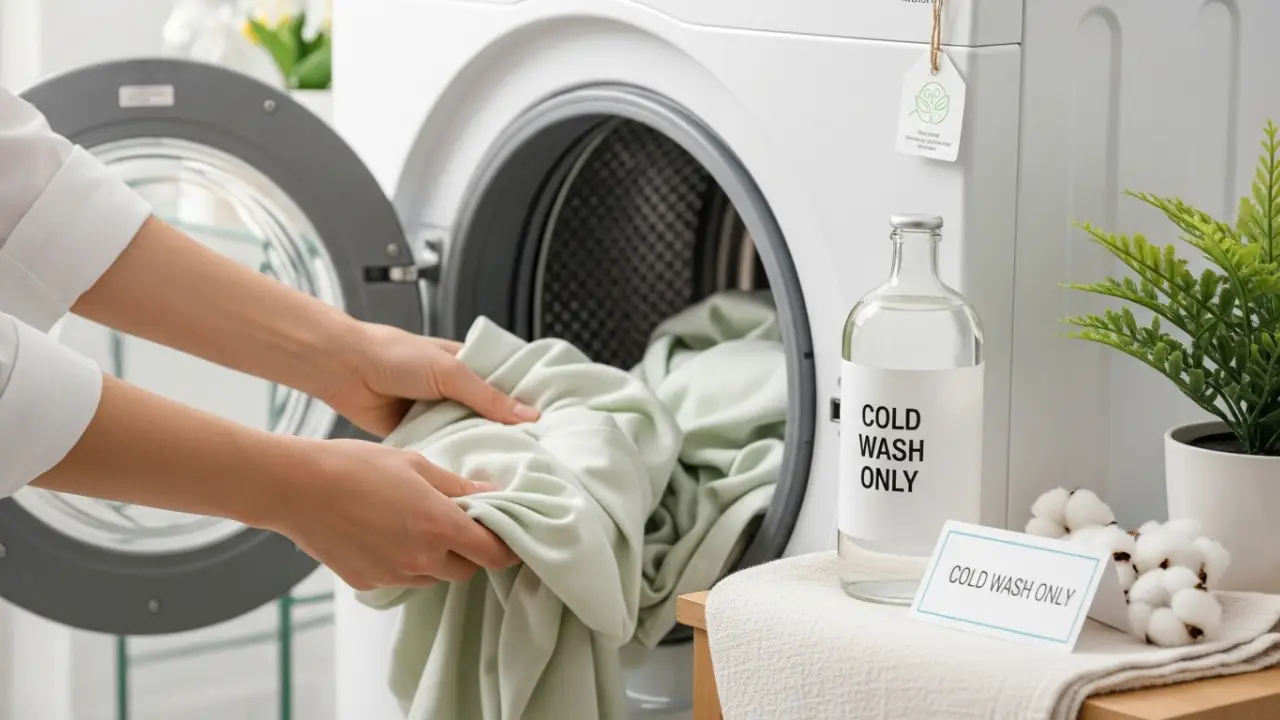
The first one is washing, which occurs most frequently.
Your Cold Water Best Friend
It is not suitable that heat can work faster with organic cotton. Rinsing in cold or slightly warm water will not break down the natural fibers, and will avoid the shrinkage that is unnecessary.
Cold water is also useful in preserving colors which is particularly necessary to organic cotton products which have been colored with natural or plant based dyes.
Gentle Detergents Should Be Selected
Regular detergents are also packed with various chemicals, predicted by optical brighteners, synthetic fumigators, sulfates, and enzymes, checking to be extremely rough on organic cotton and the skin that sports it.
Rather, use the detergents which are eco-friendly, biodegradable and are:
-
Bleach and phosphate free
-
Fragrance fine or natural fragranced
-
It is marked as gentle fabric or infant friendly consumption
Some well-known brands of low impact are:
-
Seventh Generation
-
Ecos
-
Charlie’s Soap
-
Dr. Bronner’s (concentrated)
When used in small quantities, the Laundress Signature Detergent may enhance the effect of Chlorine by being absorbed twice to increase the impact of the latter.
In a thrifty mood you can even mix your own gentle detergent using castile soap, baking soda, and washing soda.
The Turn Garments Inside Out
This is one small tip that will enable you to maintain your clothing surfaces. It reduces:
-
Pilling of the clothes surface
-
Color fading
-
Seam wears and prints
This is mostly applicable to graphic tee or darker colored cottons.
Gentle Cycle Setting
Most of the new washing machines include delicate or hand-wash cycle—this is where you want to put the organic cotton. It minimizes agitation caused by the mechanical aspect that may stretch or tension the textile.
Also, it should not be overloaded in the drum. The more room your clothes have to wiggle, the better they will do.
Is Organic Cotton to Be Hand Washed?
You do not need to manually wash all the clothes, but you can do that with something light (like undergarments or baby clothes or fine knit tees).
This is a very easy way:
-
Take cold or tepid water in a basin.
-
Add one teaspoon soft detergent.
-
Swish your clothes gently without wringing or twisting 5–10 minutes.
-
Wash in cold water.
-
Squeeze out the water in a press towel. Always avoid twisting the cloth.
It is out-dated but at times it is the most precious technique.
How to Dry Organic Cotton and Leave It Spoilt!
Now we come to what is, when it comes to the process, perhaps the most delicate phase: drying.
Avoid the Dryer (As Much As You Can)
Very high heat contributes to the death of organic cotton. It can:
-
Make substantial contraction
-
Become weaker, or make the fibers harder
-
Fade dyes
-
Fade natural colored clothes
-
Make hard wrinkles
The better option? Air drying.
During hanging, place the items on a drying rack, over a clean towel, or on a line that receives no sunbeats. It is important to make it airable without enough carrying that may stretch the clothes.
Nevertheless, in case you need a dryer, choose:
-
Low / no heat
-
A very small cycle (15–20 min)
-
Pull out when a little wet and hang them out to dry
This saves on energy consumption as well as fabric wear.
Best Air Drying Practices
Drying Techniques: Preserve Shape and Color
Proper drying keeps organic cotton in its best shape and prevents unnecessary wear. Here are tips based on garment type and fabric structure:
-
To hang tops: Suspend on padded hangers in order to maintain the shoulders.
-
On the knits or fine things: Dry with a towel, and lie flat to dry.
-
In case of trousers or otherwise structured dress: Clip at the waistband, not the hemline.
Make sure there is proper ventilation and keep your drying space clean to avoid dust or dirt sticking to damp fabric. Avoid too much sunlight, as natural dyes may fade over time.
Ironing and Steaming to Be Wrinkle-Free
Organic cotton is also prone to wrinkles—but that doesn’t mean you have to scorch your favorite shirt. Here’s how to safely remove creases and maintain fabric integrity.
The Right Way of Ironing
-
Set your iron dial to the cotton or medium setting—not hot, especially when the item is thin.
-
Always iron on the reverse side, especially if the garment includes printing or dyes.
-
Spray a little water over stubborn creases to loosen them before ironing.
-
For delicate or layered garments, use a press cloth (like muslin or a clean T-shirt) between the iron and the fabric.
Steam Instead of Iron
An organic cotton garment steamer is one of the most worthy investments if you wear organic cotton frequently. It’s:
-
Less dangerous to the fibers
-
Quicker in use
-
Excellent with gathers, pleats, or ruffles
All you have to do is hang up the garment, steam gently over the fabric, and let gravity help release the wrinkles.
Storage Matters: Keep Organic Cotton Safe Between Wears
Washing is not the only care. Of importance is also how you store your organic cotton pieces—especially when you have a humid or a dusty climate.
Clean As You Store
Some things might appear clean, but have undetectable traces of, say, sweat or skin oil or detergent film, which can draw in moths and mould. Never put away dirty clothes or those that are even wet.
Thoughtful Folding and Hanging
-
Turn down knits that are heavier so that the shoulders do not stretch.
-
Put shirts and dresses on soft or wooden hangers to avoid falling.
-
For garment types that need ironing to remove creases, like structured pants or jumpsuits, clamp hangers are necessary to reduce crease marks.
Put Breathable Storage Solutions
Moisture and odours are sealed up in plastic bins. Instead, try:
-
Clothing bag-type clothes
-
Lid bins made of canvas
-
Encircled a desk of wood
-
Had drawers of wood made of paper lined
Put in a couple of lavender sachets or blocks of cedar to moth-proof the clothes without the harsh chemical effect of mothballs.
Stain Removal for Organic Cotton (Naturally)
Stains do occur no matter how attentive you are. Who knows, after your morning coffee spill to that noodle that had the best aim in the world, there will be a pile of stains that your organic cotton clothes should go through.
However, this is not a cause to worry or run to get the bleach.
Act Fast Against Stains
The quicker the better. Organic cotton is absorbent, thus the longer a stain is on organic cotton, the more embedded it is in the fibers.
Go “Green”
Strong stain removers and bleach, enzyme-charged solutions, and heavy-duty treatments might be effective but they are capable of destroying the natural fibers and ruining naturally dyed clothes.
Natural Remedies for Stain Removal
Stains That Use Oil (such as salad dressing or make-up)
-
Scatter cornstarch or baking soda over the stain.
-
To allow the oil to absorb, leave at room temperature 15–30 min.
-
Shake and clean with soap-like detergent.
Stains Not Based on Protein (sweat, blood, milk)
-
Before removing any perfume, make sure you wash with cold water—never hot.
-
Use a baking soda + water or hydrogen peroxide + mild soap paste.
-
Wait 15–20 minutes and wash lightly.
Wine, Berries, or Sauce
-
Blot (do not rub) the excess.
-
Use 1 part vinegar to 2 parts water as a solution.
-
Wash in and out, as may be necessary.
Dirt or Mud in General
-
Allow to dry thoroughly and use the brush to shake off all the loose material.
-
Soak in warm water with a couple of castile drops.
-
Rub and wash in a gentle way.
-
Do not scrub too hard—you should dab it and soak organic fibers.
Naturally Coloured Organic Cotton Takes Special Care
Organic cotton is frequently of lovely earthy tones, such as clay, indigo, moss, and rust—and the dyes are all made with plants. These dyes are friendlier to the environment, though they are sensitive to water, soap, light, and heat.
The Way to Preserve Natural Dyes:
-
Wash always in cold water.
-
Card like items with similar colors, as they tend to bleed.
-
Put vinegar in the rinse after the last wash to help the color set (about 1/2 cupful).
-
Drying or storing should be avoided under direct sun over a long period.
-
On low heat, iron garments inside out to prevent uneven fading from direct heat.
In the case that the color wears out with time, embrace it as part of the history of a garment—because that is what natural dyes do; they fade beautifully, contributing to the individuality of your garment.
Washing and Maintenance of Organic Cotton Blends (with Polyester or Elastane)
The purity of organic cotton pieces is not always 100 percent. Most are mixed with recycled polyester, elastane (to give the product stretch), or TENCEL, which add structure, flexibility, or moisture-wicking qualities. These blends require some different treatment.
Top Tips for Blended Organic Cotton Fabrics:
-
Do not wash in hot water. Cotton may shrink, and synthetic fibers can degrade.
-
Avoid the dryer—polyester and elastane break down faster with high heat.
-
Use a Guppyfriend bag or microplastic catcher, and wash at low temperature.
-
Do not iron at high heat—use low temperature and press a cloth on the garment to absorb the heat.
In case your piece is predominantly cotton, with just a slight stretch blend (5–10% elastane), it can be handled normally as organic cotton—leaving the dryer aside.
Long-Term Care: Maintaining Organic Cotton Over the Years
Sustainable clothes are meant to last through many seasons. Organic cotton can be worn for years—if well cared for. These habits help your wardrobe survive and thrive:
1. Spin Your Clothes
Continued wear on a single article causes localized wear. Rotate your favorites so each item gets a break and recovers between uses.
2. Launder Less
Clothes don’t need to be washed every time they’re worn. Air them out unless stained or odorous.
3. Repair It, Before You Dispose Of It
Small holes, dangling threads, or unstitched seams are often easy to fix at home. Learn basic repair techniques like:
-
Running small holes by hand stitching
-
Reattaching buttons
-
Reinforcing seams
It is simpler than you imagine—and much better than throwing something away.
4. Repurpose When It Is Re-quired
Once your favorite tee begins losing its lightweight nature or wearing out to a point where you cannot utilize it, provide a second lease of life to it:
-
Make it a sleep shirt
-
Rag—cut into strips to be scrubbed out
-
Patch other clothes using pieces
Organic cotton may decompose, but it is wise to utilize organic cotton in the best possible way as it is a sustainable decision.
Washing Machines That Aid in the Sustainable Care of Cotton
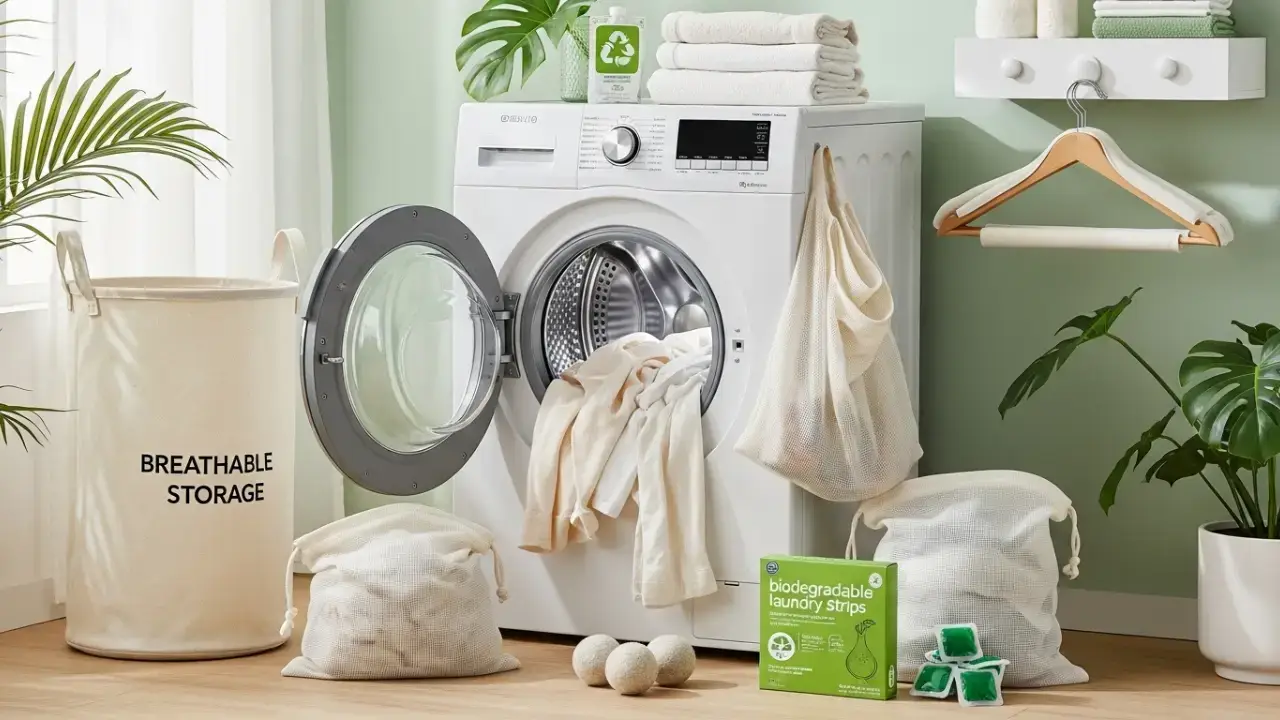
In addition to the detergent and machine configuration, your laundry gear may help (or harm) your cotton.
Recommended Tools:
-
Mesh laundry bags: These are to avoid over-pulling or stretching in a machine.
-
Padded or wooden hangers: They keep clothes in shape and do not make dents in your shoulders.
-
Wool dryer balls: Committal to low tumbling, these all-natural products shorten drying times in addition to eliminating static.
-
Laundry strips or pods: Detergent that is convenient-sized, and eco-friendly alternatives to liquid detergent, which does not use any plastic.
Even the hamper you use to wash clothes is important to you. Do not use plastic bins that keep the moisture sealed. Use air-circulating cotton or canvas hampers that risk developing mildew.
The Way to Store Organic Cotton Every Season
Assuming you switch your wardrobe by season, you should make sure you store your wardrobe well so as to maintain good quality of impressions on the clothes when not in use.
In Summer Storage:
-
Wash prior to storage to prevent mold, mildew, and bugs.
-
Light cotton dresses or tanks should be folded instead of hung so as to prevent sun-bleaching.
-
Preserve in cotton or in muslin bags—never airtight plastic receptacles.
To Be Stored in Winter:
-
Well dry knits, heavier cotton.
-
Put furniture in breathable bins or wood drawers with cedar blocks or lavender pouches to keep away pests.
-
Fold and unfold periodically (two or three months) to ensure no creases appear.
Months later, when brought out, they will still be smelling like when you placed them in your cupboard—with the soft feel.
My Opinion
And in its essence, it is not about very strict rules in caring about organic cotton at home but about developing mindful habits. Throw in a small amount of cold water one washing, a drying rack that pops up in the sun another, and presto—now you have clothes not only lasting longer, but wearing better.
By spending just a little time caring, you are reducing the life cycle of your clothes, cutting down on the amount of textile waste, and showing respect to the sustainable cycle that organic cotton depicts: farm to fashion.
You do not have to have fancy products, and a new laundry room. All you have to do is to change your mindset a little bit: a quick and disposable one into a slow and deliberate.
Your wardrobe will be glad. So will the globe.
Refrences
-
T‑Shirt Care Guide 2025 | Washing & Retaining Quality”
Covers cold-water washing, inside-out laundry tips, and avoiding dryers to extend the life of organic cotton clothing. -
How to Wash 100% Cotton Clothes Without Shrinking Them
Focuses on how to prevent shrinkage and fading in cotton garments using gentle, low-heat home care practices. -
The Good Tee. “Organic Cotton Care Guide”
Offers step-by-step guidance for washing, drying, and storing organic cotton using natural, low-impact methods. -
Grow. “Care Guide”
Details machine-washing organic cotton at 30°C, reshaping garments while damp, and drying advice to maintain softness -
Zigzag Zurich . “How to Wash Organic Cotton Bedding for Lasting Comfort”
Explains the importance of cold washing, avoiding bleach, and using gentle cycles to maintain fiber quality.