


When you use one of these skin care products that promise moisturizing but your face feels tingly, red or itchy, you are not alone.
Sensitive skin is a problem most individuals encounter in their day-to-day lives, and most of the time, the issue is irritating but not quite noticeable.
The biggest thing that people have no idea is such a nuisance.
Fragrance. The same that makes your moisturizing cream feel exotic, that pleasant smell, beautiful light, it might be the thing that burns your skin.
This guide will, however, guide you to make smarter and safer skincare decisions, particularly in choosing a moisturizer- the one product that your skin uses twice a day.
We will demystify the science, learn how to read labels and know how to identify a fragrance-free moisturizer that not only feels gentle but also is.
Understanding Sensitive Skin
We need to discuss moisturisers, but first, we need to understand what exactly sensitive skin is, as it is not limited to reddening or the occurrence of several dry spots.
Sensitive skin is a reactive skin. It reacts noticeably (and even unpredictably) to goods, the weather, pollution and internal stimuli. In case your skin:
- Stings or burns when applying new products
- Easy to turn red
- Still feels dry on skin after moisturizing
Then, you could have a broken skin barrier, which is the outermost layer that is supposed to shield you.
And in the case when this barrier is weak, the fragrance may get through and produce inflammation, even when you had never previously experienced any problems.
It is not pampering your skin; it’s protecting it.
Why Fragrance-Free Is Essential for Sensitive Skin
The reality is as follows: perfumes, even those produced with unconventional and so-called natural materials, are the most common skin allergen in the cosmetics industry.
Here’s why:
Dozen (or even hundreds) of chemicals that fragrance includes are a secret. These are the so-called trade secrets of the beauty industry, implying that companies are not obliged to inform you about what is actually in them.
Fragrance is not making your skin better; it is just making you feel better. Although a floral perfume can make your moisturizer smell more luxurious, it does not have any functional role towards skin health. The allergic component in cosmetics is fragrance.
Dermatologists and studies published by Paula s Choice and the American academy of dermatology indicate that fragrance may lead to life-long sensitivity, people with initially non-reactive skin included.
Important distinction:
Fragrance-free: no fragrance is added or any kind of masking agent.
Unscented ones could also contain some chemicals to neutralise odours, and this might lead to skin irritation as well.
The best way to go is to consume products labelled “fragrance-free” that will remove any doubt and support them by using short lists that appear to be clean.
How to Identify a Truly Fragrance-Free Moisturizer
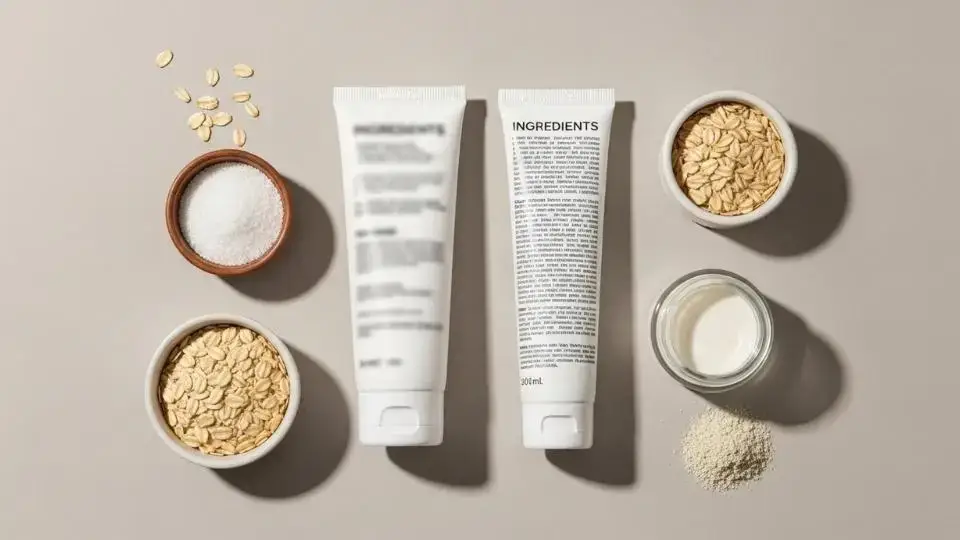
When you want to buy a moisturizer that will give your skin a break, you can almost feel like reading a foreign language. Here is how to make it simple.
✅ Check the label for these clues:
- Seek products that have a label of: fragrance-free or no added fragrance
- You will find out whether the brand tells us the meaning of this (transparency = trust)
❌ Avoid these red flags:
- Anything which is referred to as unscented without further indication
- Botanical oils, essential oils or “parfum”/“fragrance” long ingredient lists
- Such furtive pests as linalool, citronellol, limonene, geraniol, and eugenol, which are likely to be found in both artificial and natural products, ultimately trigger allergic responses
✅ What to prefer instead:
-
Short ingredients Short
-
Products labelled hypoallergenic, non-comedogenic, and dermatologist-tested
-
An unwritten rule: does it smell like anything? Then it is unlikely to be fragrance-free.
-
Important ingredients to find in Fragrance-Free moisturizers
Key Ingredients to Look for in Fragrance-Free Moisturizers
Less in the case of reactive skin, but it must remain hydrated, restored, and soothed. This is how your sensitive skin is truly, madly, deeply in love:
| Ingredient | What It Does |
|---|---|
| Ceramides | Strengthens and repairs the skin barrier |
| Hyaluronic Acid | Draws moisture into the skin without heaviness |
| Glycerin | Acts as a humectant to retain hydration |
| Niacinamide | Calms redness and improves skin resilience |
| Squalane | Lightweight oil that softens without clogging |
| Panthenol (B5) | Soothes and reduces itching or discomfort |
| Colloidal Oatmeal | Natural anti-inflammatory, perfect for flare-ups |
These are widely used ingredients in dermatologist-suggested humectants to treat eczema, rosacea, and otherwise hypersensitive skin types- and they go without the threat of an irritant of fragrances or redundant constituents.
Ingredients to Avoid (Even in “Fragrance-Free” Products)
The sad thing is that even a product labeled fragrance-free is not necessarily safe to be put on sensitive skin. Other brands replace fragrance with other skin irritants – particularly under the label of being natural.
These are the typical ingredients to avoid:
-
Alcohol denat -Commonly used in fast drying, but removes moisture and burns the sensitive skin
-
Menthol and camphor -Refreshing, but unkind to delicate or touchy skin
-
Citrus, tea tree, lavender and other essential oils – Natural does not mean gentle
-
Painful preservatives (such as formaldehyde releasers) Insidiously referred to as things like DMDM hydantoin
Choosing the Right Moisturizer Texture for Your Skin Type
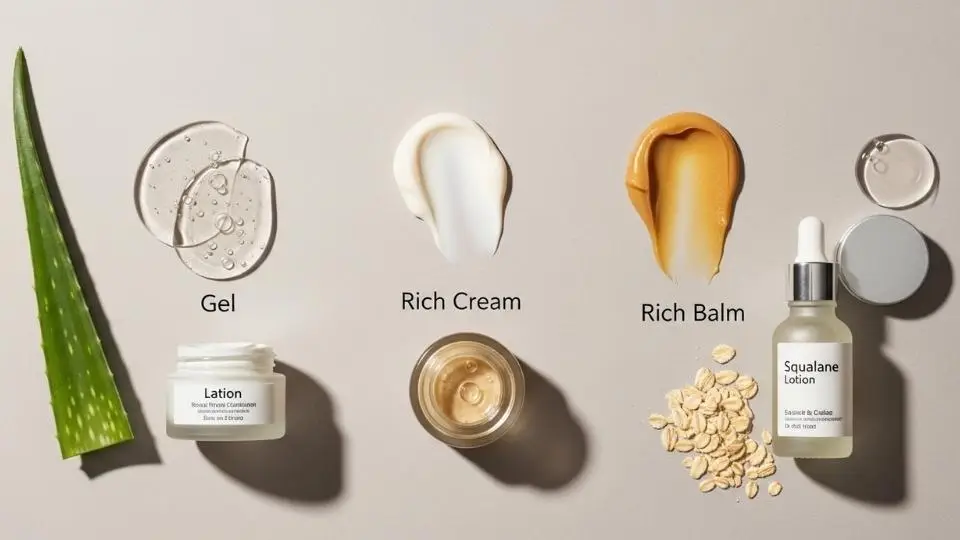
Not every moisturizer is the same and neither is the textures. Sensitive skin requires not only fragrance-free ingredients but also a favourable formulation that prevents pore clogging or over-drying.
Let’s break it down by texture type and skin condition:
1. Gel-Based Moisturizers
-
Suitable to: oily, acne-prone or combination sensitive skin
-
Why: lightweight, quick-to-absorb, no greasiness
-
Hyaluronic acid, glycerin, and panthenol of common elements
These are fantastic when you have to be outside on warmer days or when you’re wearing makeup and don’t want that heavy feel.
2. Lotion or Light Cream
-
Suitable to: Normal to sensitive, standard, and sensitive skin
-
Why: It does not leave one feeling heavy during hydration
-
Natural ingredients: Ceramides, squalane, niacinamide
This is the most multifunctional one, it is more suitable to wear this type every day, during the day, and in the evening.
3. Rich Creams and Balms
-
Recommended skin: Dry, mature, sensitive and irritated skin
-
Why: This assists in trapping moisture and re-establishing a broken skin barrier
-
Shea butter (unscented), colloidal oatmeal, cholesterol, fatty acids
Night time or inflamed, flaky skin and at winter time are the right time to use rich creams.
Best Application Practices for Sensitive Skin
The most effective moisturizer also cannot work well without being used in the right manner even in instances where the skin is reactive. These are some tips on how to be well hydrated and avoid irritation as much as possible:
1. Patch Test First
Put a bit behind your ear or on your jaw-line and after 24 hours wait. In case of no reaction, then probably it is safe on your face.
2. Apply to Damp Skin
Not only do moisturizers do their best when we apply them to slightly wet skin immediately after cleansing or spritzing, but the techniques are also valid. This aids in arresting water as well as in repairing the barrier.
3. Use the Right Amount
Apply the size of a pea gently by spreading with fingerts without any rubbing, tugging, or circular actions.
4. Layer Wisely
When applying serums or any treatment, moisturizer should go on after the water-based products but before the sun screen in the morning and occlusive balms at night.
5. Don’t Overdo It
Occasionally, sensitive skin turns out to be inflamed due to excessive layering. Make your routine as limited as possible..
Top Dermatologist-Approved Fragrance-Free Moisturizers
Having considered dermatologist advice, brand ratings, the safety of the ingredients used, and customer testimonials, here are some of the fragrance-free moisturizers that are truly efficient, leaving behind the absence of irritations.
| Product | Best For | Key Ingredients |
|---|---|---|
| CeraVe Moisturizing Cream | Dry or eczema-prone skin | Ceramides, hyaluronic acid |
| Vanicream Moisturizing Lotion | Ultra-sensitive, allergy-prone | Glycerin, petrolatum |
| Paula’s Choice CALM Moisturizer | Redness-prone, rosacea skin | Licorice, niacinamide, oat extract |
| La Roche-Posay Toleriane Ultra | Allergy-prone, dry skin | Neurosensine, shea butter |
| Avene Skin Recovery Cream | Barrier-damaged skin | Thermal spring water, glycerin |
| Cleure Moisturizing Lotion | Minimalist, no plant-based irritants | Squalane, glycerin |
These lines are obsessed with the minimal ingredients tested formula, and zero addition of the fragrance making your skin receive what it needs, and nothing more.
What is the Difference between Fragrance-Free and Unscented vs. essential oil-based?
The skincare shelf may be a dangerous place with all those misleading labels, particularly concerning sensitive skin. Let’s clarify:
| Label | What It Means | Safe for Sensitive Skin? |
|---|---|---|
| Fragrance-Free | No added fragrance or masking agents | ✅ Yes |
| Unscented | Contains masking chemicals to neutralize odor | ⚠️ Sometimes |
| Essential Oil-Based | Uses plant oils for scent or “natural fragrance.” | ❌ No (often irritating) |
Bottom line: Always opt for fragrance-free products and read the entire ingredients list to ensure.
When to See a Dermatologist
Regardless of the right selection, your skin may occasionally require medical-grade care. This is the time when you should seek help:
-
Your skin becomes constantly reddened, flaky or itchy, even with non-aggressive products
-
Moisturizers lead to the development of swelling, hives or breakouts in your notice
-
You suspect eczema, rosacea or contact dermatitis
-
Even products that are clean, natural or fragrance-free make your skin worse
To narrow down on the specific allergens, a dermatologist can assist you in recommending medicated creams and barrier-repair treatment products, depending on your skin.
My Opinion
Sensitive skin isn’t delicate, it is just telling the truth. It shows you, in a loud voice, what is out of place. And fragrance?
That is generally on its no-thanks list. Your decision to use fragrance-free moisturiser is not just about olfactory insensitivity; it is also about respecting the biology of the skin, not discounting the need to provide space for it to heal, and prioritising function over form.
Be it dry, itchy, acne-prone, or crazily reactive, the right unscented, non-stimulating moisturiser is out there for you, and now you know where to go to seek it.