


And that is a struggle of summer (being cool and being conscious on what we wear). With the climate change, what you consume in terms of what you wear is as important as what you consume on what you eat or your means of transportation.
And in case you are that kind of person who is in need of both comfort and sustainability, then one easy but bold change you can make is selecting biodegradable fabrics when shopping for the summer outfits generating in your wardrobe.
Some fabrics that are biodegradable are those that can disintegrate without tainting the environment.
On the bright side during summer, they come with an added advantage: they tend to be breathable, lightweight and easier on your skin.
Here, on this blog, we will learn about the most appropriate biodegradable garments to use in warm weather, where you could identify eco-friendly clothes made in the most sustainable levels, and how your wardrobe can cool beyond your body.
What Makes a Fabric Biodegradable?
A fabric has to meet the biodegradability criteria by breaking down in a reasonable span of time under normal conditions (typically in less than six months or one year) in the presence of environmental factors such as moisture, bacteria and oxygen. Nature such as fabrics that are made out of plants or proteins are unaffected by dyes that are non-toxic and safe and are biodegraded when untreated.
However, the fabric content is not the only thing. The blends, finishes or synthetics added during the processing has often been found wrong. Even a 95-5 cotton-spandex shirt is not a completely biodegradable garment. The same happens with clothing made of heavy metals or chemical dye or water-repelling paints that may take many years to decompose or spill dangerous substances into the ground.
Why Biodegradable Fabrics Are Ideal for Summer
Summer is so hot that it requires garments that are breathable, sop up sweat and are not heavy when worn. Fast fashion made of synthetics such as polyester/acrylic fabric holds moisture and heat, which is uncomfortable and even causes irritation to the skin. However, biodegradable fabrics are breathable, they absorb moisture effortlessly, and they have a cool feel against your body.
They also will not use as much microplastics when being washed, which is a significant threat to the environment. Each time you wash polyester or nylon, small plastic fibers are released in the water which find their way to the oceans. Natural fibers do not do this.
Best Biodegradable Summer Fabrics
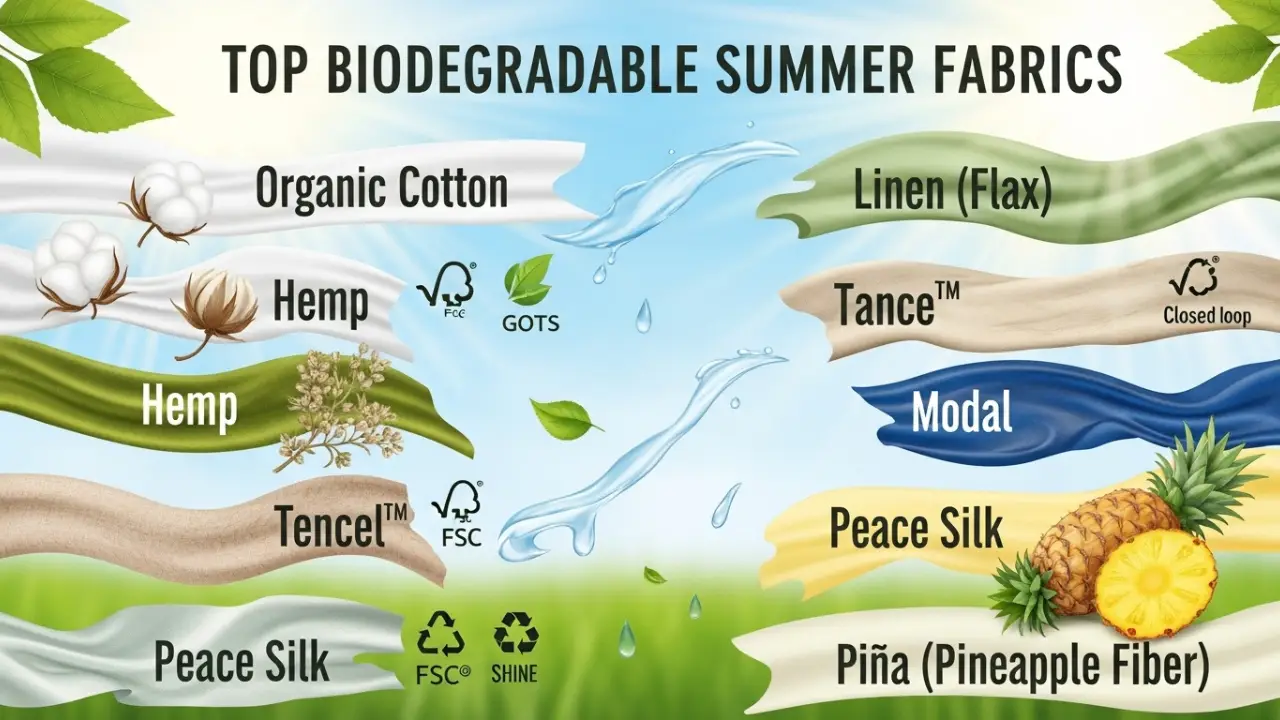
So, it is time to plunge into the most trendy biodegradable fabrics that can be used in warmer weather. These are the types of materials which have passed the test of time with breathability, comfort, and planet-friendliness:
1. Organic Cotton
Cotton is a summer garment. It has been cultivated without toxic pesticides or GMOs and thus is kinder to your skin as well as planet. It is much less water-intensive and soil-friendly in comparison with regular cotton. To be genuine, seek organic cotton GOTS certified.
2. Egyptian Flax Fiber
Linen is a product manufactured out of flax, which is one of the most sustainable crops on the planet. It also does not need much water or any pesticide. It dries exceedingly well in high heat and the crinkly texture and light weave are natural. Given that linen softens with each cleaning, it brings an outdoors flavor to your outfits during the summers.
3. Hemp
Hemp is a superhero fabric: it is breathable, antimicrobial, and UV-resistant. It is a fast-growing crop, enhancing the soil quality and uses very little water. Although it is hard in its beginning, it ages gracefully.
4. Tencel™ (Lyocell)
Tencel™ is made of wood pulp that was sustainably sourced and produced by a closed-loop process that recycles 99 percent of the solvents consumed. The material is soft, cool, and it biodegrades naturally.
5. Ramie
Less well known but a hidden treasure, ramie is a flowering nettle family plant. It creates a very long-lasting material similar in appearance to linen yet will not wrinkle. Perfect on classic tops or jackets in summer.
6. Modal
Modal is stretchy, very absorbent, and made of beech trees. It is ideal for undergarments, T-shirts, and loungewear. As with Tencel™, modal can also be made in a sustainable way, through closed-loop processing.
7. Peace Silk / Ahimsa Silk
Traditional silk means boiling silkworms; peace silk means letting moths out and picking up the cocoon. It has all the class of silk, but it is in a cruelty-free form. Loose, light, and airy—easy-to-wear fabrics. Ideal for summer events.
8. Fibers of Banana, Orange and Pineapple
These are new-generation clothing materials made using agricultural waste. Piña or Piñatex (equal parts pineapple fibre, silver, and plant fibres) is a compostable, fashionable, and unique statement piece. Also made with banana and orange (waste) fibre: banana fibre (stem) and orange fibre (juice by-products).
Best Biodegradable Fabrics for Summer
| Fabric | Breathability | Durability | Skin Sensitivity | Eco-Certifications | Compostable? |
|---|---|---|---|---|---|
| Organic Cotton | High | Medium | Very Gentle | GOTS, OEKO-TEX® | Yes |
| Linen | Very High | High | Gentle | EU Ecolabel, GOTS | Yes |
| Hemp | High | Very High | Gentle | GOTS, OEKO-TEX® | Yes |
| Tencel™ | High | High | Extremely Soft | TENCEL™, FSC® | Yes |
| Modal | High | Medium | Very Soft | OEKO-TEX®, FSC® | Yes |
| Ramie | Medium | High | Medium | GOTS | Yes |
| Peace Silk | High | Medium | Soft | Certified Ahimsa Silk | Yes |
| Banana Fiber | Medium | Medium | Soft | Emerging Certifications | Yes |
The Types of Fabrics to Avoid Using in Summer in Order to Obtain Biodegradability
Shall we be real? The majority of summer fast fashion is put together in synthetic blends. These trap heat, lower comfort, and are polluting. The most atrocious offenders?
-
Polyester: Polyester is made of petroleum, non-biodegradable, and releases microplastic fibres.
-
Nylon: Just as in the case of polyester, there is ground to assume that it is heat-retentive and polluting.
-
Acrylic: Pretends to be wool, but chokes up the skin during summer time.
-
Synthetic Blends: Synthetic addition, even at 5 percent, can inhibit complete decomposition.
Relieve your body and the environment by avoiding these materials.
The Way of Finding the True Biodegradable Fabrics
Purchasing the right kind of fabrics is not the only thing—ethical sourcing is also necessary. Not every brand that claims to sell eco-friendly and natural clothes does so, and this trend deserves to be held against it. In order to really make a difference, it is essential to learn how to pick out reliable sources and standards.
Start with the Fabric Tag
Begin on the tag of materials. Instead of such general listings as natural blend or eco fabric, look for specific names like 100% organic cotton or 100% hemp. Never stop digging around.
When the brand is transparent concerning the sourcing of where and how it fabricates its products, then that is a good attribute.
Look for Full Traceability
Some brands even offer full traceability—allowing you to know which farm the cotton was grown on or which forest the wood pulp was taken from. Sustainable brands will typically have a separate page on their website explaining how they source and produce their goods.
What to Watch Out For: Greenwashing
Greenwashing describes a situation where businesses sell their products as nature-friendly without necessarily making serious efforts. Here is the trick to prevent you from falling into that trap:
-
Generalizations: Terms like sustainable, eco, or green without specific, verifiable support.
-
No certifications: No third-party authorizations or transparency in production methods.
-
Too much focus on packaging: Just because the packaging is recycled does not mean the brand is truly sustainable—especially if 90% of their clothes are made of polyester.
-
No end-of-life scheme: Authentic sustainable brands discuss how the product can be recycled or composted.
Reliable clothing companies will promote beyond certifications and clearly define what they do in their fabrics to make them biodegradable and environmentally friendly.
Identification of Certifications Worth Trusting
This is a handy reference table to see at a glance whether biodegradable/sustainable fabric certifications are credible:
| Certification | What It Ensures | Applies To |
|---|---|---|
| GOTS (Global Organic Textile Standard) | Verifies organic status and eco-processing | Cotton, wool, silk |
| OEKO-TEX® Standard 100 | Tests for harmful substances in textiles | All natural and synthetic fibers |
| FSC® (Forest Stewardship Council) | Responsible forest management for wood-derived fabrics | Tencel™, Modal, Viscose |
| EU Ecolabel | Lifecycle impact of products, including water use and emissions | Linen, hemp, blends |
| Certified B Corporation | Ethical business practices, environmental and labor standards | Company-level certification |
| Bluesign® | Safe chemical inputs, clean water and air practices | Textile production |
Spotting the Right Tags Means You’re on the Right Track
Once you find any of the above tags when you are buying summerwear, you are heading in the right direction.
Summer Wardrobe Style with Environmentally Friendly Fabric
Designing clothing made of biodegradable material does not imply compromising fashion style. Quite on the contrary—such fabrics are, most of the time, more textured, luxurious, and the overall feel is more natural. These are ways to keep your summer wardrobe stylish and sustainable:
Layer on Purpose
A linen kimono over an organic cotton tank can add depth—not heat.
Play with Texture
Pair hemp trousers with a Tencel™ blouse for a smooth-and-rough contrast.
Embrace Neutrals and Earth Tones
Biodegradable materials usually come undyed or dyed with low-impact processes. These colors are classic and multifunctional.
Buy the Basics
Build your summer capsule wardrobe with breathable fabrics like organic cotton, hemp blends, and linen. Think tees, shorts, and dresses.
Accessorize Sustainably
Choose bags made of jute, straw hats, or cork-soled shoes to complete your look with purpose.
Biodegradable Fabrics Care
To ensure your wardrobe lasts and your clothes stay beautiful, proper care is essential. Natural fabrics are often more delicate than synthetics. Here are a few care tips:
Cold Wash
Hot water can relax fibers and cause shrinkage. Use mild, biodegradable detergents.
Air Dry
Avoid tumble drying where possible. It conserves energy and prolongs the life of the fabric.
Avoid Harsh Chemicals
Bleach and strong detergents can erode natural fibers. Keep it gentle.
Store Smart
Store clothes in a cool, dry place. Use cotton garment bags instead of plastic ones.
Mend, Don’t Toss
If there’s a small hole or tear, repair it. Extend your garment’s life and reduce landfill waste.
Summary: Style That Speaks to the Planet
Biodegradable fabrics give you the chance to stay cool in the heat—with minimal fashion footprint. Made from organic cotton, peace silk, and more, they are soft on your skin, breathable in hot weather, and kind to the environment.
Through mindful shopping, smart care, and ethical styling, biodegradable clothing can be the foundation of a wardrobe for someone who dresses with intention.
Wearing biodegradable materials is not just about fashion—it’s a shift in mindset.
It teaches us to love nature, waste less, and think long-term.
The comfort these clothes offer is more than physical—
it’s the comfort of knowing your values are woven into what you wear.
References
-
Sahni Fabrics. 7 Sustainable Fabrics to Consider for Summer.
-
FabricSight. Exploring the World of Biodegradable Fabrics.
-
Loom & Fiber. Natural Fabrics for a Sustainable Summer.
-
Ethical Edge Collective. Sustainable Fabric Choices for Your Brand.