


This is the world that we live in—when fashion is not as seasonal as it used to be. Skinny jeans are in one minute, the next minute wide-leg cargo pants. So somewhere in this constantly changing fashion world, there is one thing that has been picking up considerable momentum and popularity, and it is not just another trendy style. It is all about the right thing.
Sustainable fashion is no longer a niche. It is an essential stance towards the excesses and wastefulness of fast fashion. However, the reality about the word sustainable is that when you hear it, your wallet winces. There is a strong possibility of one having to pay a lot of money to use an ethical brand, and many of us see it as a deal breaker.
The Good News: It Doesn’t Have to Break the Bank
There is a way to develop a sustainable wardrobe without breaking your bank account. There is no need to chuck everything you have or to go on buying sprees on the designer eco-reputed brands. All you require is to have a purpose, some creativity, and a desire to abandon the fast fashion mentality.
Your roadmap is here in this post. Over the course of the next few weeks, we will take a look at creating an environmentally friendlier wardrobe—one that is fair to those who make your clothes, and also, one that fits your budget.
But What Is a Sustainable Wardrobe Actually?
And now that we have finally come around to the how, it is time to unblue the what. A sustainable wardrobe does not mean racks of shirts made out of organic cotton or shelves with clothes of pricey ethical brands. It is all about conscious ownership. It is an idea whose time has come and it all means:
-
Putting on what you already possess
-
Purchasing less
-
And when you purchase—making better choices
A sustainable wardrobe usually refers to:
-
Clothes which are not designed to disintegrate after three washes.
-
Ethically made pieces, which, to most people, means fair wages, good working conditions, and protective environmental effects.
-
Materials that are either natural or recycled and contain fewer harmful chemicals.
-
Classic designs that you cannot resist wearing.
More than that, though, it is about getting away from the need to always have more.
Why It’s Worth It (Even When You’re on a Budget)
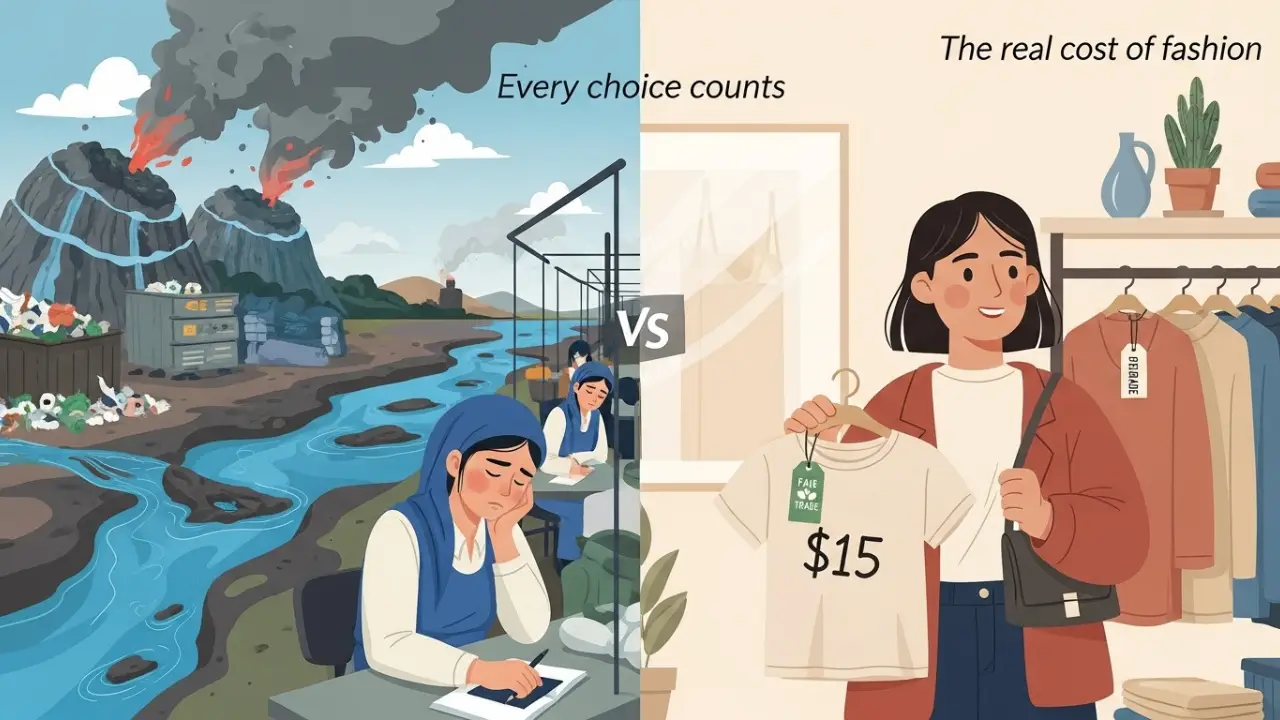
The second-largest polluting business in the world—ranked after oil—is fashion. Every year, millions of tons of textiles are buried in landfills. Rivers are poisoned by toxic dyes. The workers in factories, mainly women, are being short-changed and overworked in hazardous conditions just to supply the cheap garments.
When we purchase a T-shirt at the price of 5 dollars, we leave the true cost to a third party. Perhaps it is the planet. Possibly it is the garment worker. Nevertheless, there is always some price.
The decision to invest in a sustainable wardrobe—however small the budget—is a silent protest against this system. It states, I am the bigger picture and I prefer to make better choices.
Step 1: Begin With What You Have in the Closet
The first thing that you should not do if you are considering having a sustainable wardrobe is to go shopping.
Just in case you are reading this—yes, you read that right.
What you already have is the most sustainable clothing. Even if it’s fast fashion. Even if it was the result of an impulse purchase several years ago. The goal isn’t to replace these items—but to use them well.
Conduct a Wardrobe Check-up
Strip it all down, and ask yourself:
-
So what then do I actually wear?
-
What looks good and feels good?
-
Which pieces are in the back gathering dust?
You are apt to find:
-
Objects that you forgot you had and nevertheless love.
-
Items that may be restored with some slight repairs.
-
Hypes you wish you hadn’t spent money on—but that can be restyled.
This activity can help you rediscover your personal style, spot gaps in your wardrobe, and clarify what you truly need—not just what you’re told to want.
Step 2: Finding Your Personal Style and Day-to-Day Needs
One of the biggest reasons we overshop is that we don’t really know our own style. When you understand what suits your life and what you naturally gravitate toward, you’re less likely to be swayed by flash sales or fleeting trends.
Ask yourself:
-
Which colors are natural to me?
-
Which silhouettes or cuts make me feel good about myself?
-
What types of clothes do I actually need in my lifestyle?
Do you work from home and really need five blazers?
Do you live in a warm climate yet keep overinvesting in coats?
It can be incredibly helpful to create a mini mood board (hello, Pinterest?) of outfits and looks you love. This helps set a personal style benchmark and makes future purchases less impulsive and more intentional.
Step 3: Have the “Buy Less, Buy Better” Mind Frame
Sustainable doesn’t necessarily mean expensive—it means thoughtful.
Fast fashion encourages us to chase quantity: more clothes = better style. In practice, the opposite is true. High-quality, multi-purpose items serve you better and longer.
Quality Before Quantity
Instead of buying five inexpensive pieces that shrink or fade after two wears, consider investing in one sturdy, well-made item. Look for:
-
Natural fibers like cotton, wool, hemp, or linen
-
Sewing details: Are the stitches tight and clean?
-
Fabric weight: Is it light and flimsy, or thick and durable?
A quality product may cost more up front, but it becomes more economical over time.
And no—it doesn’t mean spending $200 on a shirt. It could simply mean choosing a fair-trade tee for $30 over a poorly made one for $10.
Step 4: Get Thrifty — The Sustainable Way to Shop on a Budget
Thrifting is a treasure trove for those who want to assemble an eco-conscious wardrobe on a tight budget. It prevents clothes from ending up in a landfill, breathes new life into old items, and gets you a bargain of good quality.
The Do and Don’t of Thrifting
-
Have a list of what you need, not what is fun.
-
Visit various neighborhoods, as some thrift shops cater to different styles and price ranges.
-
Examine thoroughly—do zippers work? Check seams, underarms, and hemming.
-
Search for natural materials and known brands—these often have a longer life.
If in-person thrift stores aren’t accessible, try online platforms such as:
-
Depop
-
Poshmark
-
ThredUp
-
Vinted
-
eBay
Online secondhand companies often include filters for size, color, material, and brand—making the search more convenient and less stressful.
Step 5: Trade Clothing With Friends (That’s Right, Actually)
It may sound like a high school sleepover, but clearing out your closet with clothing swaps is one of the best ways to save money and be eco-friendly.
Invite some friends, bring second-hand clothes, and exchange items. You leave with “new” pieces while spending nothing. It’s also a great way to pass along clothes you don’t wear anymore—someone else might love them.
There are also community clothing swaps in many cities and Facebook groups where folks share. It’s movable, affordable, and local.
Step 6: Build a Year-Round Capsule Wardrobe
A capsule wardrobe is a small collection of items that can be worn in endless combinations. It’s fewer things—but higher quality.
This approach is beautiful in how it simplifies your options while offering tons of variety. When done properly, it saves time, money, and decision fatigue.
How to Do It Without Buying Everything New:
-
Start with what you already have. Look at your favorite pieces. What do you commonly wear? What colors grab at you?
-
Choose a color palette. Muted shades like black, white, beige, navy, and grey are versatile. Add 2–3 accent colors for personality.
-
Think functionally. Choose tops, bottoms, outerwear, and shoes that can be mixed and matched.
-
Go seasonal. No need to build everything at once. Start with one season and grow from there.
You’ll be surprised how many outfits you can create from 25–35 well-chosen items.
Step 7: Pay Attention to How You Must Treat Your Clothes
One of the simplest ways to be more sustainable is learning how to increase the life of your clothes. Most garments don’t fall apart—they wear down from overwashing, poor storage, or lack of care.
Laundry Do and Don’ts to Live Longer
-
Wash less often. Clothes don’t need a wash every day unless smelly or dirty.
-
Use cold water to avoid shrinking and color fading.
-
Turn clothes inside out to protect the fabric’s surface.
-
Avoid the dryer. Air drying reduces heat damage and is energy-efficient.
-
Use gentle, eco-friendly detergents, especially for delicates and natural fibers.
Storage Tips
-
Fold bulky knits to avoid stretching.
-
Use padded or wooden hangers for coats and blazers.
-
Avoid plastic bags for off-season clothes—choose breathable garment bags instead.
Care may not be the most exciting part of your wardrobe—but it adds years to your clothes and keeps your favorites in rotation longer.
Step 8: Repair & Upcycle What You Have
Fast fashion puts more emphasis on discarding instead of mending. However, when a small hole appears, it does not mean that it’s time to throw it away. A small learning of some repair techniques can leave a huge difference in wastage and costs.
Begin with Insurances of Minor Repair:
-
Putting on a button
-
Mending husk-rips
-
Straightening loose ends
-
Straps or waistband tightening
No, you do not have to be a tailor. YouTube videos offer you tons of tutorials that will show you how to repair your clothes using only a needle, thread, and a pinch of patience.
Take One Step Ahead: Upcycling
Make what is old new:
-
Make jeans into shorts
-
Make a long dress into a two-piece outfit
-
Darken a stain in a T-shirt
-
Add embroidery, patch, or trims to make your own way
Upcycling allows you to be creative and save some money, as well as save your clothes off the landfills.
Step 9: Pay to Use, Not to Own — When You Don’t Need to Own
Come on, you sometimes need some outfit for a certain occasion: a wedding, fancy dinner, an interview, a themed party, to name a few. However, purchasing a new product, which one can use once, is not a solution.
Or, instead try these:
-
Lease through the local or an online site. The possibility of renting such stylish items differs depending on which country you live in, but the available possibilities include Rent the Runway, HURR, MyWardrobeHQ, or even local shops.
-
Take a loan with friends or relatives. It seems that we always forget that there are a lot of excellent choices that already hang in another woman’s closet.
-
Buy together with your friends — think small collective wardrobe where you can swap statement items.
This can come in handy especially when you are on a tight budget yet you are busy in your calendar.
Step 10: Don’t Get Tempted by Fast Fashion
Sustainability is important, but donning your environmentally friendly hat does not mean you cannot be lured back into the fast fashion industry. Fast fashion is well aware of the way to tempt, and they do it: flash sales, influencer hauls, and that constant mindset of needing something new.
Here’s how to stay grounded:
Unfollow and Unsubscribe
-
Get off of promotional mail.
-
Silence or unfollow those influencers who promote overconsumption.
-
Put slow fashion information or fashion advice instead into your scroll.
The 30 Wears Question
Before making any purchase, ask yourself:
How many times will I wear this — 30 times?
If the answer isn’t a firm yes, it may not be worth it.
Concentrate on Styling, Not Purchasing
You’d be surprised what you can get out of what you already own. How to:
-
Fold, pin, and roll inventively
-
Use accessories to alter a look
-
Combine patterns or textures for freshness
Many times when you want a new look, your closet already has it — you simply haven’t brought it out yet.
Step 11: Monitor and Keep a Budget
Sustainable living is a process. Monitoring the progress made keeps you positive and conscious.
Try this:
-
Make a buying diary — Document every purchase: what is its origin, reason for buying, how frequently you wear it.
-
Keep track of money saved via thrifting, borrowing, or mending.
-
Create quarterly challenges, such as “no new clothes for 30 days” or “second-hand only this summer.”
The more conscious you are about your habits, the simpler it is to change them in a positive way.
My Opinion
Not the false idea: you have to have money to be sustainable. As a matter of fact, exploring your wallet can actually transform you into a better sustainable shopper. It makes you deliberate, get on human pace, and think before a purchase.
Sustainability is not perfection. Not being possessed by linen shirts and not shopping only with high-end eco-brands. It is all about doing what you can, with what you have, where you are.
Fixing something, replacing something, telling yourself no to make one more unnecessary purchase — that is progress. That’s power.