


We’ve all experienced it—you reach into your closet, pull out a favorite shirt, and discover a small hole near the hem or a loose stitch under the arm. And what do we usually do, almost without thinking? Toss it in the donate pile… or worse, the trash. It’s quicker, easier, and there’s always something shiny and new waiting in an online cart.
But what if we paused for a moment?
What if that tiny tear wasn’t the end of that garment—but the start of a new kind of relationship with your clothes?
Repair isn’t just about saving fabric—it’s about preserving stories, saving money, and protecting the planet, one stitch at a time. And the best part? Anyone can learn how to do it—even you.
This guide will help you build the mindset, gather the tools, and take the first beginner-friendly steps toward mending your clothes at home—with confidence and creativity.
Why We Discard Clothes—And Why We Shouldn’t
Many of us throw out damaged clothes thinking it’s simply not worth fixing. That’s because fast fashion has conditioned us to treat clothing as disposable. A stain, a rip, or some fading? Toss it and buy another.
But this throwaway mindset has led to a global textile crisis.
The Ellen MacArthur Foundation reports that the average garment is worn only 7–10 times, and each year the world generates over 92 million tons of textile waste—enough to fill a garbage truck every second.
The Benefits of Mending (It’s More Than Just Saving Money)
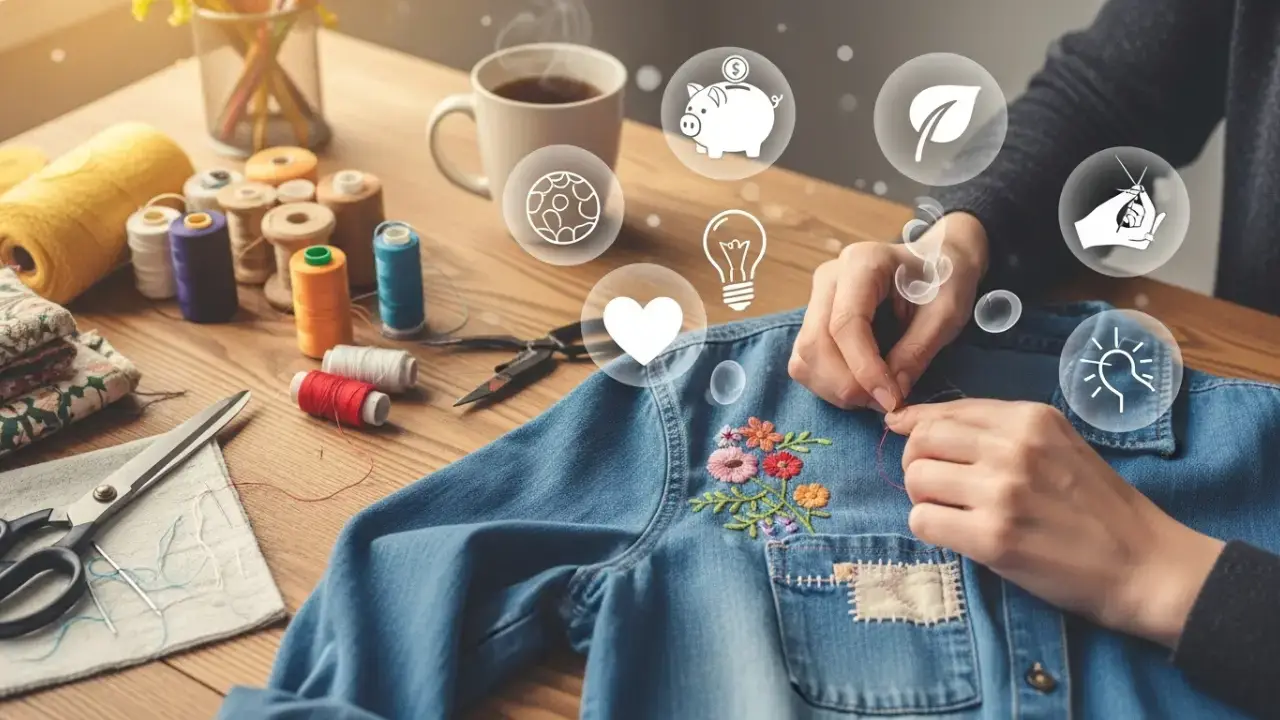
Mending does more than fix fabric. It builds skills, fosters connection, and becomes a canvas for self-expression. Here’s what you gain by choosing to repair:
Environmental Impact
You reduce textile waste, conserve water and energy, and decrease demand for new clothing.
Financial Savings
Keep your wardrobe intact longer and reduce your spending on replacements.
Sentimental Value
Hold on to pieces tied to memories, milestones, or meaningful stories.
Creative Fulfillment
Visible mending techniques let you personalize and even enhance your garments—turning flaws into features.
Self-Reliance
Learning to repair gives you confidence and control. You don’t need to depend on buying new when something goes wrong.
You don’t need to be a sewing expert—just curious and willing to try.
Getting Started: What You Really Need to Repair Clothes
Most mending doesn’t require a sewing machine, fancy craft room, or expensive materials. In fact, you probably already have what you need.
Start simple—with a needle and thread, a patch or two, and a willingness to experiment. That’s enough to begin changing how you think about fashion—and yourself.
Basic Mending Starter Kit:
| Item | Purpose | Beginner Tip |
|---|---|---|
| Hand sewing needles | For most repairs, choose a universal needle. | Use a thimble to protect your fingers. |
| Thread | Match color or contrast for visible mending. | Start with cotton or polyester blends. |
| Sharp scissors | Clean cuts prevent fraying. | Fabric scissors are best—never use paper ones. |
| Iron | Helps flatten patches and fabric edges. | Always iron before sewing a patch. |
| Seam ripper | For removing mistakes or damaged seams. | A pencil-tip tool that’s great for beginners. |
| Scrap fabric or patches | For reinforcing or decorative repairs. | Use old clothes as patch sources. |
Step 1: Identify the Damage
Before you reach for your thread and needle, take a close look at the garment:
-
Is the fabric cleanly torn or frayed?
-
Is the material thinning around the tear?
-
Will the repair be visible?
-
Is the area under stress (like knees or underarms) or decorative?
This will help you choose the right method and decide whether to make the repair invisible or visible.
Step 2: Match the Mending Method to the Problem
Different kinds of damage call for different solutions. Here are some common clothing issues and how to handle them:
Small Holes and Tears
These are easy to fix:
-
Use a running stitch or whipstitch to close the gap.
-
Add a patch beneath for reinforcement, then stitch around it.
-
Works great for T-shirts, leggings, and cotton tops.
Ripped Seams
If the seam has come undone but the fabric is intact:
-
Turn the garment inside out.
-
Use a backstitch to resew along the original seam line.
-
Tie off the thread securely at both ends.
This method is ideal for trousers, dresses, and shirts—especially after repeated wear.
Missing Buttons
Don’t throw away those extra buttons that come with new clothes—there’s a reason they’re included.
-
Match the size and style of the original.
-
Thread through each hole 2–3 times.
-
Finish with a secure knot on the inside.
Loose Belts, Collars, or Waistbands
If elastic is stretched:
-
Open a small section of the inner seam.
-
Remove and replace the elastic.
-
Sew the seam closed.
If dealing with a drawstring:
-
Use a safety pin to feed it through the channel.
Step 3: Discover the Beauty of Visible Mending
Not every repair needs to be hidden. In fact, visible mending is a growing movement that embraces flaws as features and stitches as statements. It combines utility and self-expression using bold threads, embroidery, and patterned fabric.
Popular Visible Mending Techniques:
-
Sashiko Stitching: Traditional Japanese technique using white thread on indigo cloth.
-
Colorful Contrast: Bright thread on dark fabric—florals on jeans or neon on black tees.
-
Geometric Embroidery: Use stars, triangles, or circles to fill holes or tears.
-
Playful Patterns: Mirror repeated shapes along hems or cuffs for design symmetry.
-
Embrace Imperfection: Let the hand-done feel show—knots, quirks, and all.
Visible mending gives mass-produced clothing a second personality—one only you could create.
Step 4: Make Time and Space for Repair
Modern life moves fast. If you don’t make time to mend, it won’t happen.
-
Dedicate 15–30 minutes weekly or monthly.
-
Keep a small basket or box for garments that need repair.
-
Set up a quiet space with good lighting.
-
Listen to a podcast or sit by a window—let the rhythm of sewing become meditative.
Step 5: Know When to Repair, Repurpose, or Release
Not every garment needs to be saved—but every piece deserves a thoughtful decision.
-
Repair it: If the damage is minor, the fit is good, and the garment is still functional.
-
Repurpose it: Too damaged to donate? Turn it into a tote bag, headband, or cleaning cloth.
-
Give it away: If it’s in good shape but no longer suits you, let someone else enjoy it.
Embracing Imperfection: The Art of Visible Mending
Visible mending is more than a patch—it’s a philosophy. It invites us to see damage as history, not failure.
-
A patch on a sleeve adds a pop of color.
-
A mended knee carries a memory.
-
Each stitch tells a story of care and intention.
With visible mending, you’re not just fixing clothes—you’re reclaiming creativity, adding originality, and making your wardrobe truly yours.
Steps to Modern Patch-Mending of Special Materials
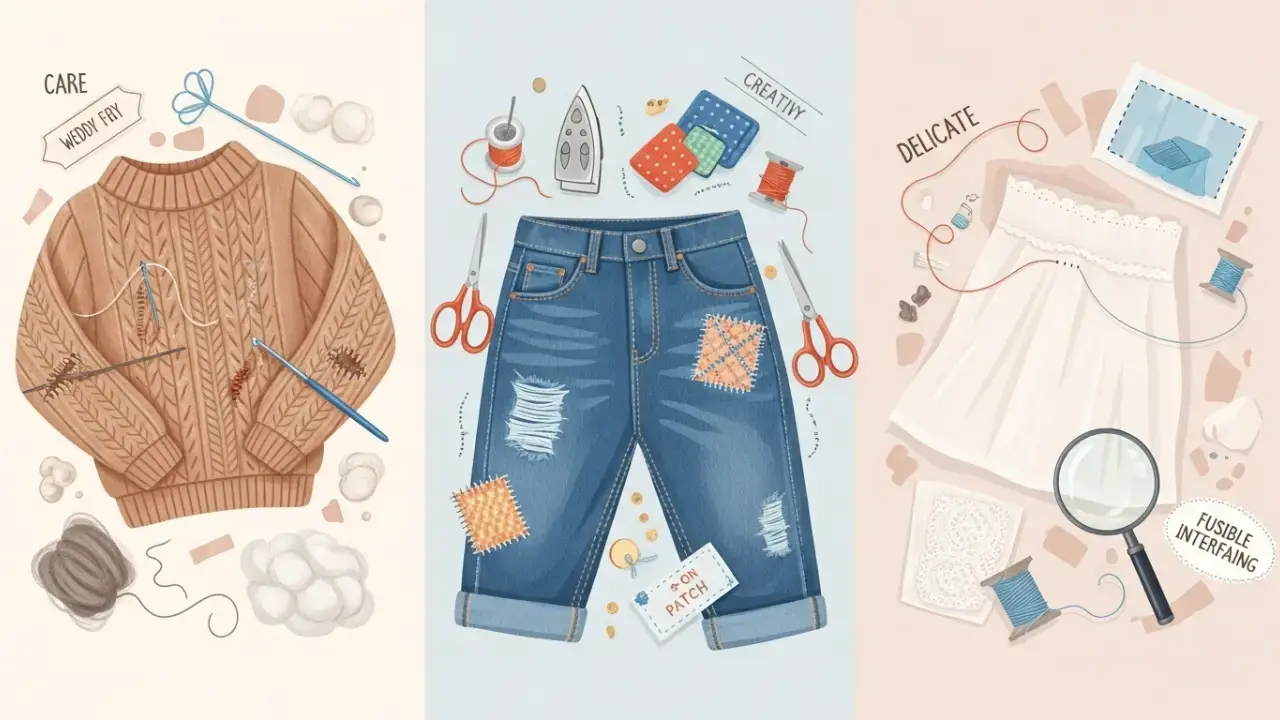
Once you’ve gained confidence with basic mending techniques, you may feel ready to tackle garments made from more delicate or unique fabrics. These materials require a more careful approach, but with patience and the right tools, you can master them too.
Here’s how to mend some of the most common special fabric types:
1. Mending Knitwear and Sweaters
Knit fabrics—like wool, cashmere, or jersey—are known for snagging, stretching, and unraveling, but they’re very repairable with a bit of care.
Techniques for Repair:
-
Use a darning needle or crochet hook to gently pull snags back into place.
-
Try a duplicate stitch to mimic knit loops when covering small holes.
-
Needle felting can reinforce weak areas like elbows or cuffs using wool roving and a felting needle.
-
For larger holes, use needle-weaving techniques or patch with a piece of matching wool felt.
Knitwear can be fragile, but with these methods, you’ll extend their life while keeping their cozy charm intact.
2. Repairing Denim
Denim is a durable fabric, but once it begins to wear—especially in areas like the knees or inner thighs—it can shred quickly. Fortunately, denim is also one of the most satisfying materials to mend.
Techniques for Repair:
-
Use iron-on patches on the inside of worn areas to reinforce high-stress zones.
-
Try visible mending with sashiko stitching or colorful running stitches across worn spots.
-
Add decorative patches or embroidery to denim jackets and jeans for both repair and flair.
Denim mending doesn’t just fix damage—it often makes the piece cooler than it was before.
3. Mending Sheer or Delicate Fabrics
Fabrics like chiffon, silk, lace, or crochet are precious and fragile. They require gentle handling and fine tools.
Techniques for Repair:
-
Use superfine thread and fine needles (size 9 to 12).
-
Work slowly and gently, taking tiny, precise stitches.
-
For small tears, place sheer fusible interfacing on the inside to stabilize the fabric before sewing.
-
Use tiny hand stitches to blend with the original texture of the garment.
When working with high-value or heirloom items, consider consulting a professional tailor. However, with the right technique and patience, small snags and tears can often be repaired at home.
Mending Techniques Compared: Which One to Use?
| Type of Repair | Best For | Look/Finish | Tools Needed | Skill Level |
|---|---|---|---|---|
| Stitching | Small holes, seam repairs | Minimal to invisible | Needle, thread | Beginner |
| Patching | Large rips, worn spots | Visible or hidden | Scrap fabric, needle, thread | Beginner–Intermediate |
| Darning | Knits, socks, sweaters | Textured and firm | Darning needle, hoop | Intermediate |
| Embroidery | Decorative mending | Artistic | Embroidery floss, hoop | Intermediate |
| Iron-on repair | Quick reinforcement | Clean, semi-hidden | Iron, patch or fusible tape | Beginner |
Long-Term Care to Prevent Future Damage
Mending is only half the journey. The real goal? Preventing damage before it happens. With a few conscious habits, you can dramatically reduce wear and tear—keeping your wardrobe stronger, longer.
Smart Washing Habits
-
Only wash when necessary: Not all garments need cleaning after each wear.
-
Use cold water: It saves energy, protects color, and is gentler on fabrics.
-
Mesh laundry bags: Perfect for delicates like lingerie, lace, or knitwear.
-
Skip harsh detergents and bleach: Choose soft, natural alternatives to preserve fabric integrity.
Drying and Storage Tips
-
Air dry when possible: Heat from dryers weakens fabric fibers and elastic.
-
Store folded: Hanging knits or heavy garments can stretch them out.
-
Avoid overstuffing your closet: Give clothes space to breathe and reduce rubbing, wrinkling, and wear.
When Mending Isn’t an Option: Try Upcycling
Sometimes garments are just beyond repair—but that doesn’t make them useless. Upcycling is the art of giving them a new life in a new form.
Reuse Ideas for Old Clothes:
-
T-shirts → turned into cleaning rags, tote bags, or headbands
-
Jeans → transformed into aprons, purses, or patchwork quilts
-
Shirts → used to make doll clothes, baby bibs, or reusable gift wrap
Even when the main garment is done, save components like buttons, zippers, or fabric scraps for future repairs or projects.
Upcycling proves that nothing has to go to waste. You’re not sending your clothes to the landfill—you’re giving them a second purpose.
Making Mending a Lifestyle
So how do you actually make mending a regular part of your life? Start small. Keep it sustainable. No pressure to be perfect.
Tips to Make Mending a Habit:
-
Keep a “mend me” basket in your closet.
-
Host a monthly repair night with friends (think: pizza, stories, and patching).
-
Use mending as mindfulness: Take 10 quiet minutes a week away from screens. Let your hands do the work. It’s grounding, creative, and calming.
This kind of slow, intentional work brings you closer to your clothes. It reminds you that repair is not just fixing—but connecting.
Summary: Why I Choose to Repair
I decided to patch up my garments—and it changed everything.
I didn’t just repair fabric—I started respecting what I already had. Every time I sew a rip or darn a hole, I feel more attached to that piece.
The old and worn have become meaningful. Repairing has taught me patience, sparked creativity, and made me appreciate what I own. And—perhaps most surprisingly—I love my clothes more now than I ever did before.
Refrences
- ABC News Australia. How to Mend Your Clothes to Make Them Last Longer.
- Future Green Blog . 5 Easy Ways to Repair Your Clothes.
- C&A Europe. Upcycling Ideas and Repairing Old Clothes.
- The Dyas Magazine. The Lost Art of Mending Clothes.
- Reskinned Blog The Art of Repairing Clothes.