


There’s nothing new about the realization that your once silky hair has turned brittle, frizzy, or unruly after weeks—or years—of flat ironing, curling, or blow-drying. You’re not alone.
Heat styling tools may give you a flawless look in the moment, but over time, they weaken your hair’s structure and strip it of its natural strength.
The positive side?
You don’t have to cut it all off. You can begin repairing heat-damaged hair with natural oils—no scissors required.
Learn What Caused the Destruction
Heat damage occurs when your hair is repeatedly exposed to high temperatures. This strips natural moisture, breaks protein bonds, and lifts or cracks the cuticle layer of your strands.
Whether it’s everyday straightening, curling your bangs each morning, or aggressive blow-drying, the result is the same: dry, brittle, lifeless hair.
Signs of Heat Damage:
-
Split ends
-
Breakage
-
Rough texture
-
Shedding
-
Loss of elasticity
What if you could reverse the damage—drop by drop?
What Makes Natural Oils So Powerful?
Natural oils have stood the test of time in global beauty routines. Rich in fatty acids, antioxidants, and vitamins, these oils mimic your scalp’s natural sebum, delivering deep moisture and repair—without harsh chemicals.
Unlike silicones or synthetic serums that give only surface-level shine, natural oils penetrate the shaft and help strengthen your hair from the inside out.
Think of it as feeding your hair the nutrients it’s been missing—gently, gradually, and effectively.
The Best Oils for Healing Heat-Damaged Hair
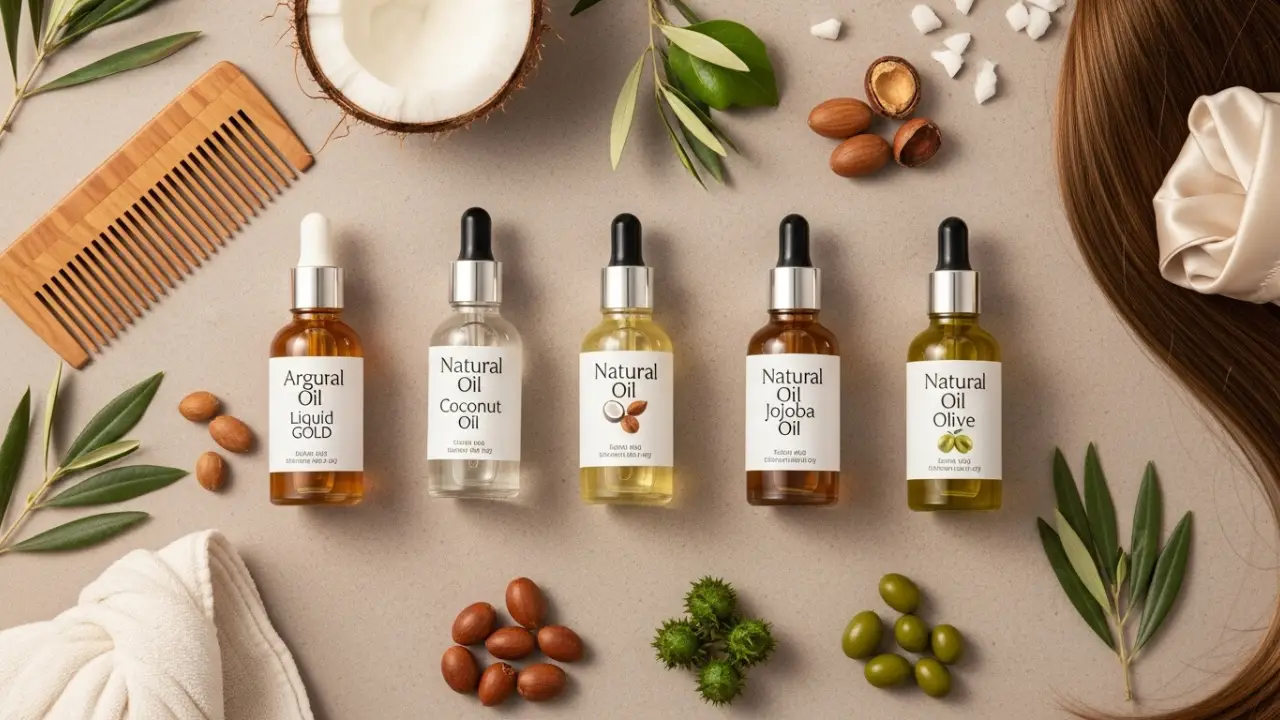
Not all oils are created equal. Some are lightweight and fast-absorbing; others are thick, deeply nourishing, and best for serious repair. Here are the most effective oils for damaged, heat-treated hair:
Argan Oil
Often called “liquid gold,” argan oil is rich in antioxidants and vitamin E. It smooths frizz, hydrates dry strands, and improves elasticity. Use it as a daily moisturizer or a leave-in serum that you can rinse out later.
Coconut Oil
A staple in many households, coconut oil is known to reduce protein loss and strengthen the hair shaft. It penetrates deep into the cortex, making it ideal for coarse or porous hair.
Castor Oil
Thick and sticky but incredibly potent, castor oil stimulates hair growth and locks in moisture. It’s especially effective for split ends and thinning roots.
Jojoba Oil
Closely resembling the body’s own sebum, jojoba oil balances oil production while nourishing the scalp. It’s perfect for oily scalps with dry ends.
Olive Oil
Packed with antioxidants and fatty acids, olive oil helps to restore shine and soften rough strands. It also works well as a detangler for curly or afro-textured hair.
Natural Oils in Damage Repair: How to Use Them Effectively
Repairing damaged hair with oils isn’t just about which oils you choose—how you apply them can make all the difference. Whether you’re looking for deep healing or everyday protection, here are the most effective methods for using natural oils to revive your hair.
Hot Oil Treatment
The gold standard of at-home healing.
Warm your preferred oil (comfortably hot, never scalding) and massage it into the scalp and along the hair shaft. Wrap your hair in a warm towel and let the treatment sit for at least 30 minutes. Or, for a more indulgent boost, leave it overnight.
Why it works:
-
Boosts blood circulation
-
Softens the cuticle
-
Allows oils to penetrate more deeply
Overnight Soak
Got severely parched strands? Try an overnight oil soak.
Generously apply oil from the mid-lengths to the ends, loosely braid your hair, and protect it with a satin bonnet or soft towel. Wash out in the morning.
Result:
You’ll notice the softness and elasticity after just one session.
Scalp Massage (Scalp “Ceremony”)
More than just relaxing, scalp massages stimulate follicles and improve nutrient absorption.
Use a drop of jojoba or castor oil, and gently massage your scalp using circular motions with your fingertips for 5–10 minutes. Repeat this two to three times per week for best results.
Everyday Leave-In Treatment
For daily shine and light protection, apply a few drops of argan or grapeseed oil to damp hair post-shower. Focus on the ends.
Benefits:
-
Seals the cuticle
-
Locks in moisture
-
Adds natural shine without weighing hair down
How to Make Homemade Repair Masks
You can boost the power of oils by combining them with other nourishing kitchen ingredients. Here are a few simple DIY mask recipes:
Coconut & Honey Revival Mask
For brittle, overworked hair
-
2 tbsp coconut oil
-
1 tbsp honey
Apply to clean, damp hair and leave on for 20–30 minutes. Rinse thoroughly.
Avocado & Olive Oil Mask
For softness and shine
-
½ ripe avocado
-
1 tbsp olive oil
Blend and apply to damp hair. Leave on for 30 minutes, once a week.
Castor Oil & Aloe Vera Growth Mask
For thinning, breakage-prone hair
-
1 part castor oil
-
1 part fresh aloe vera gel
Massage into the scalp and let sit for 30–45 minutes before rinsing.
Other Lifestyle Changes to Maximize Results
Natural oils work best when paired with healthy hair habits. Consider these adjustments:
-
Use a silk or satin pillowcase to reduce nighttime friction
-
Switch to wide-tooth combs, and detangle only when hair is damp or dry—not soaking wet
-
Trim split ends regularly to prevent further breakage
-
Limit heat styling; use heatless methods like braids or rollers
-
Always apply a heat protectant if styling is necessary
When You Will See the Results
There might be a bit of improvement following the initial few applications—reduced frizziness, more luster, and blotch detangling—but the restoration is not quick. Most dramatic changes may not be noticed until at least 4–6 weeks after you have made your oil routine. Get before-and-after pics to see your progress and remember to enjoy the minor victories on the way.
Mistakes That People Do with Hair Oils
Although natural oils are effective, they can be abused—most of the times causing a build-up of products or irritating the scalp. Over-application is one of the most usual errors. The more the oil, the better the results does not always happen. The thing is that excessive ones can suffocate your scalp, stuff pores, and invite dirt.
The thumb of rule? Use a couple of drops and add more only when your hair is unusually thick or coarse.
The second wrong one is the use of oil on dirty or product-loaded hair. Oils seal—this is not a cleaner. Can be applied to already sweaty or dry shampoo or styling product-laden hair to simply trap it all in. It is advisable to put on clean or lightly damp hair.
You should also remember about the necessity to rinse properly. Although overnight oiling is good, after some days of oiling your hair, leaving the oil on your scalp will cause irritation or dandruff. The following morning, apply a mild shampoo thoroughly.
What Can Be Done to Analyze Future Heat Damage
After your hair has started to heal, you will desire to protect your gains. As repair, prevention is also important. Begin by the reduction of the heated styling tools. When absolutely necessary, reduce the heat setting of the blow dryer or flat iron and do not forget a heat protectant spray.
Think of trying your natural texture more frequently. On the internet, there are millions of tutorials on heat-free waves, twisters, and braid-outs that can leave your hair lovelier than ever without burning your locks. Learning to do this may be a learning process, but it is worth the effort.
Buns, braids, or twists are also protective styles since they minimize most of the daily heat and friction. As long as they are not too tight, they will put some pressure and actually crack along your edge.
How to Choose the Right Oil for Your Hair Type
Not every oil works the same for everyone. Fine hair, for example, can get weighed down easily with heavy oils like castor or olive. If your strands are thin, opt for lightweight options like argan, grapeseed, or even rosehip oil. These absorb quickly and don’t leave residue.
For curly or coily textures, heavier oils like coconut and castor work beautifully because they seal in moisture and define curls. If your scalp is naturally oily but your ends are dry, try using jojoba on the roots and heavier oils only on the ends.
Also pay attention to porosity — high porosity hair absorbs oil easily but loses moisture fast, while low porosity hair resists penetration. A simple water strand test can help you determine this.
Blending Oils for Custom Treatment
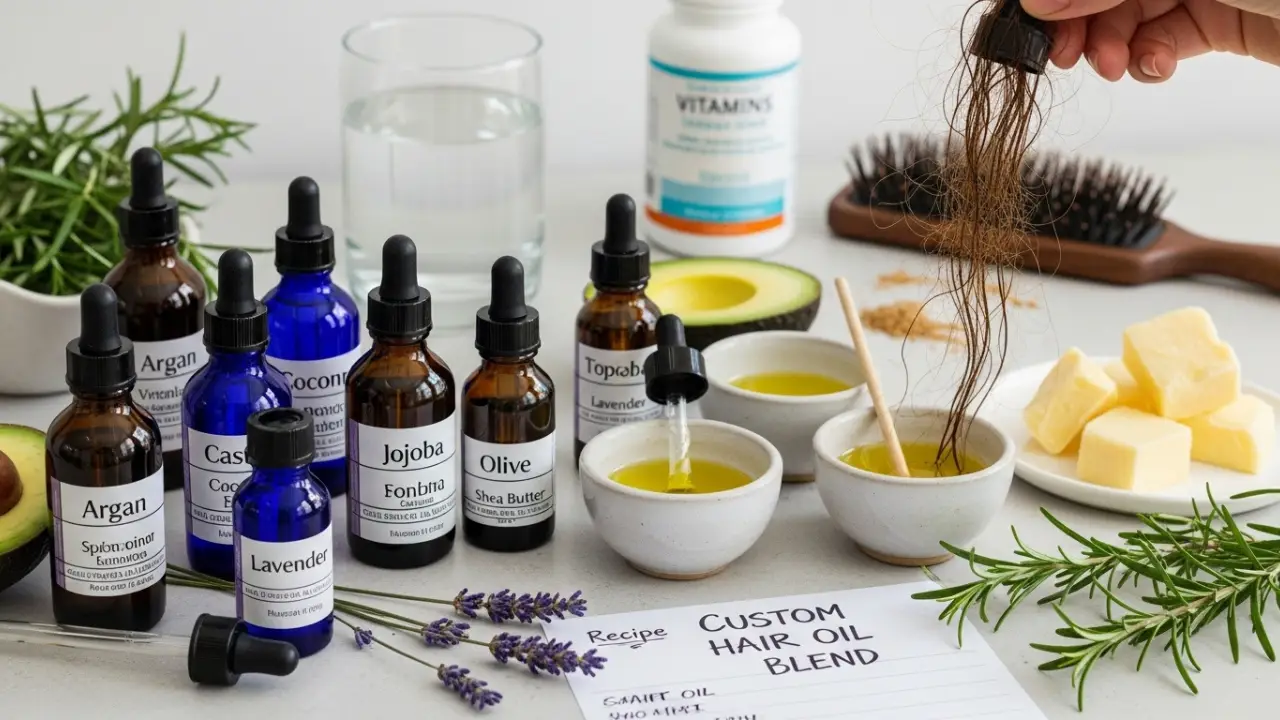
Once you’re comfortable with individual oils, you can start blending them for custom treatments. Think of it like building your own conditioner. For example:
-
For strength & shine: Mix argan, coconut, and a drop of lavender essential oil.
-
For hair growth: Try castor, rosemary essential oil, and jojoba.
-
For dry, frizzy ends: Olive oil + avocado oil + shea butter (melted).
Blend in small batches and store in dark glass bottles to preserve potency.
Signs That Your Hair Is Healing
So, how do you know the oils are working? Look for these signs:
-
Hair feels softer and detangles easily
-
Reduced breakage during combing
-
Frizz is more manageable
-
Ends appear smoother and less split
-
Scalp feels balanced, not itchy or flaky
-
Natural shine returns even without styling
These small improvements add up over time and indicate that your hair’s internal structure is repairing itself.
When to Seek Professional Help
Despite your best efforts, sometimes the damage is too deep. If your hair is breaking off in chunks, feels gummy when wet, or you’ve chemically treated it along with heat abuse, you may need salon-level intervention.
Professional stylists can recommend protein-rebuilding treatments, keratin masks, or trims that preserve as much length as possible. There’s no shame in asking for help — in fact, it may accelerate your journey toward healthier hair.
The Role of Diet and Supplements
Hair health doesn’t stop at the scalp — it’s also internal. Make sure you’re getting enough protein, iron, and omega-3 fatty acids in your diet. Collagen supplements, biotin, and zinc have been shown to support growth and resilience.
Hydration is also key. Dry hair is more susceptible to heat damage, so drink plenty of water daily. Pair your oiling rituals with a nourishing lifestyle, and your results will be even more dramatic.
Natural Oils in Weekly Routine Repair
Wish to make the healing process easier? This is one of the weekly schedules suggested:
-
Sunday: Deep treatment of oil (e.g. coconut + castor), overnight
-
Monday: Shampoo + leave-in condition, use argan oil
-
Wednesday: Massage on the scalp using jojoba oil
-
Friday: Just-in-time oil mask (olive + honey), 30 minutes
-
Daily: Add a few drops of lighter oil at the ends when required
This type of regimen creates regularity and provides your hair with the nutrients it desires without shocking it.
Applying Oil Combinations with Other Hair Products
It is not obligatory to go 100 percent natural, in case you are not prepared. Oils should be complementary to your most liked products; however, they must be free of sulfate and should not deplete the scalp. Most hair product companies have gone as far as to produce oil-based lines, including shampoos and serums.
Apply oils in the form of pre-poo masks prior to the shampoo treatment, or as a finisher on styled hair. Apply them under your leave-in conditioner to lock in the moisture. It is to base it on the use of oils—not the sole resource.
Preventing the Overprocessing Once Again
It is easy to relapse once your hair starts coming back. However, prevention is better than cure. Remove duplicating heat and chemical processes. Separate any dyeing or bleaching treatments by time, and never have any heat treatment on wet or even damp hair.
When dyeing your hair, make it ammonia-free or avoid high peroxide ones, and remember to deep condition afterward. Heat-styling? Make it no more than once or twice per week and cover it with oils.
Trust the Process
To make your heat-damaged hair right, it is not just another beauty treatment—it is your self-care. Every massage, every rinse, every drop of oil is a gesture of love toward something that frames your face, reflects your health, and enhances your confidence.
And the most remarkable one is that… you do not require a top-end salon. All you need is your pantry, your patience, and a little consistency.
My Opinion
I had the experiences of fried ends, dead strands, and the dreaded crunch of excess heat. Turning to natural oils made it all different to me, though.
I began to really nourish my hair gradually, regularly, and with care.
Argan returned my glory, castor made my roots feel stronger, and jojoba levelled my scalp in a way nothing could. It was not instant, yet it was real healing.
With a little patience, I noticed that the softness returned, the breakage decreased, and that elasticity returned. Don’t despair at the damage inflicted by heat; all you have to do is restore the damage by returning to nature.