


You are not making up various conditions when your face turns red after a hot meal, glows when you put on a new skincare product, and remains red well after a workout.
Chances are, you might have rosacea, the widely occurring yet misconstrued chronic skin disease that affects millions of individuals all over the world.
Facial redness on the cheeks, nose, and chin is the brightest and most worrying sign of rosacea.
However, this redness goes deeper than the surface of the skin – it represents a deeper inflammation, a compromised barrier, and a skin type that deserves extraordinary care.
And here is the real problem: the rosacea-susceptible skin is hypersensitive, and it has an adverse reaction to most of the skincare ingredients that you apply to the skin as a therapeutic measure.
How, then, do we solve it?
Safe barriers and supportive, gentle ingredients were selected not only based on their performance but also based on what they do not do: They do not irritate, inflame, or overwhelm your already fragile skin.
A lot of rosacea redness can be treated without medical interventions, but you need to know everything about the condition, its causes, and how gentleness is the key to successful management.
What Is Rosacea? A Deeper Look at the Condition Behind the Redness
Rosacea is a long-lasting skin disease with inflammation that primarily affects the face. It is neither a poor hygiene problem nor is it acne that most people tend to confuse it with. Instead, rosacea is supported by a combination of vascular, inflammatory, immune, and environmental factors.
The American Academy of Dermatology (AAD) and Mayo Clinic report that rosacea is most likely to occur in adults aged between 30 and 50, but people with fair skin are more susceptible, and every ethnicity can be affected by rosacea.
Significant symptoms are as follows:
- Constant flushing/blushing
- Telangiectasia is the presence of small blood vessels visible to the naked eye.
- Pustules or red bumps like acne
- Stinging, burning or tight skin
- Thicker skin (at the nose, particularly in severe cases)
- Irritation of the eye (ocular rosacea)
Rosacea is a chronic disease. Left to develop naturally or without any care and supervision, the symptoms might aggravate with the passage of time – a reason why timely and mild intervention is very crucial.
Rosacea Subtypes (Recognizing Your Pattern)
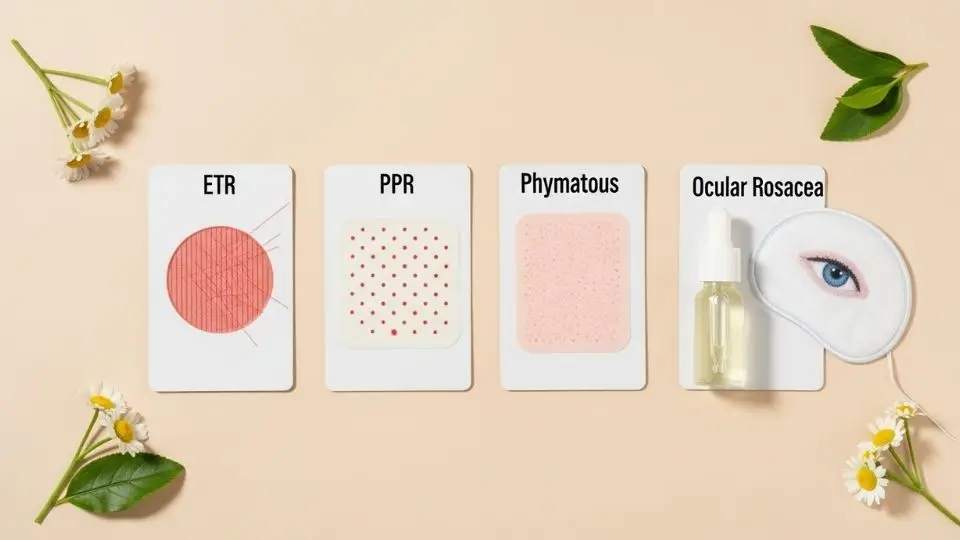
Rosacea does not exist in a single form; it exists in many forms, and each form has its symptoms, course, and even treatment.
There are three basic rosacea subtypes, which can help to pick the right ingredient, prevent additional triggers, and communicate better with a dermatologist.
Though these types help to treat and understand the problem, it is necessary to remember that a significant number of individuals have combinations of symptoms, which makes rosacea rather than a diagnosis.
Erythematotelangiectatic Rosacea (ETR)
This is commonly occurring and low level of rosacea.
It is described by the use of continued reddening, flushing, and the appearance of the blood vessels (also known as telangiectasia) on the cheeks or nose.
Individuals suffering from ETR usually complain of burning or stinging sensations and can even think that their skin is irritated or sensitive all the time, even without any product being used.
Papulopustular Rosacea (PPR)
Commonly confused with adult acne, papulopustular rosacea manifests itself with red bumps on the face and pimples accompanied by pus.
But, in contrast to acne, PPR does not deal with blackheads or whiteheads (comedones).
The redness and swelling around the affected parts are characteristic of this subtype, and it may periodically recur in cycles. Most of the sufferers of PPR have symptoms of ETR in conjunction.
Phymatous Rosacea
Phymatous rosacea is characterised by thickening of the skin and especially on the nose- a condition medically referred as rhinophyma.
The skin then eventually becomes bumpy and uneven over time.
It occurs more frequently in men, and it usually evolves within several years. Although uncommon, it necessitates medical treatment and is either handled surgically through topical treatment and, at times, surgical resurfacing.
Ocular Rosacea
There are cases when individuals have signs of the disease around or in their eyes, ocular rosacea.
It presents itself through red irritated eyes, inflamed eyelids, gritty sensation and even sensitivity to light.
Ocular symptoms may precede the onset of facial rosacea in most cases, and this may cause a delay in diagnosis.
When left unattended, this could become threatening to vision and overall eye health, which, similarly to other vision problems, requires the early intervention of an eye care specialist.
What Causes Rosacea? (It’s More Complex Than You Think)
Although the distinct cause is not revealed, scientists are unanimous in the belief that the development of rosacea is a result of numerous systems:
- Family history (Hereditary)
- The immune system loses sensitivity (hyper-response to stimuli)
- Neurovascular dysfunction (Easy trigger blood vessels)
- Demodex mites (little creatures that live on our skin microscopically and occur with more frequency on the skin prone to rosacea)
- Gut-skin connection (the presence of such conditions as SIBO or IBD may aggravate flares)
- Damage to the skin barrier (higher transepidermal water loss and reduced tolerance against the outer irritants)
This means rosacea is a chronic condition because there is no single trigger or cause to get rid of. However, it can be observed that skin gets inflamed, reactive, and red because of a weak barrier and hyperreactivity to environmental and chemical stimuli.
Common Rosacea Triggers That Worsen Redness
It is as essential to know what triggers your rosacea as it is what is to be applied. The diminishing number of flare-ups can be attributed to 90tricks as a result of the avoidance of triggers, according to the Cleveland Clinic.
🔥 Environmental Triggers:
-
Sun exposure
-
Wind or cold weather
-
Hot showers, heat, and humidity
-
Quick fluctuation of temperature
🍷 Lifestyle Triggers:
-
Alcohol (more so, red wine)
-
Spicy foods
-
Caffeine
-
Smoking
-
Mental pressure or distress
💄 Skincare & Cosmetic Triggers:
-
Fragranced products (even “natural” ones)
-
Harsh cleansers or exfoliants
-
Alcohol-based toners
-
Essential oils (lavender, eucalyptus, citrus)
-
Physical scrubs or peel pads
🧬 Internal/Medical Triggers:
-
Hormonal changes (e.g. Perimenopause)
-
Problems with the digestive tract or food intolerance (histamines, dairy, gluten)
-
Certain medications (steroids, vasodilators)
Maintain a rosacea diary of two weeks. Monitor the things you eat, how you feel, your skincare, and the weather patterns that occur so that you will be able to respond to flares better.
Why Gentle Ingredients Are the Cornerstone of Rosacea Care
When it comes to rosacea, more is very seldom better. The tendency to do too much is an easy trap.
Add an anti-acne product, exfoliator, or a redness solution that works in a fraction of the time and ends up making the problem worse.
That is all your skin requires: protection, hydration, and inflammation control. That is where the gentle ingredients stand out.
🔬 Here’s why they matter:
1- They protect and repair the skin barrier
The skin that is prone to rosacea dries up quickly. Lightweight components such as ceramides and glycerin strengthen your outer shell, which helps in retaining water and preventing irritants as well.
2- They reduce inflammation without side effects
Actives such as niacinamide, panthenol, and green tea extract will relax the skin’s immune response without breaking its balance.
3- They support long-term healing
Sensitive treatment assists your skin in healing flares and becoming stronger with time. This limits the reactive treatment or medications.
4- They reduce reactivity
The skin most susceptible to rosacea tends to be sensitive to general skincare that includes so-called actives, such as retinol, vitamin C, and exfoliating acids.
When you apply calming ingredients, you reduce low-grade inflammation, and therefore, it takes fewer things to make a flare-up.
Best Gentle Ingredients for Calming Rosacea Redness
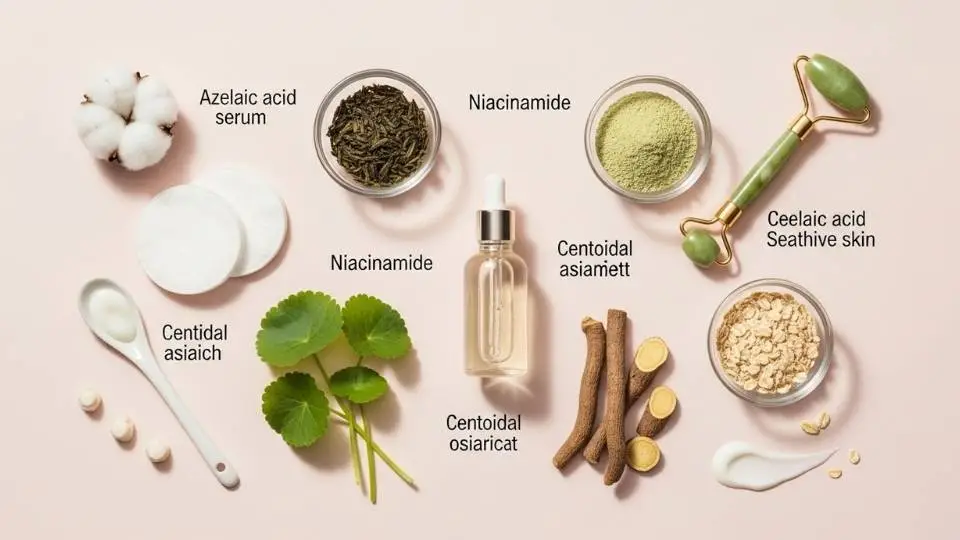
Your skin will not only require moisture when dealing with rosacea; it must also require strategic soothing.
The proper ingredients are more than just a form of hydration; they go there to calm the inflammation, fortify the skin barrier, and smooth out the frequency of inflammatory redness in the long term.
So, without further ado, let us check out the most recommended gentle ingredients that have been regularly proven to assist in controlling the symptoms of rosacea, as listed by dermatologists.
1- Azelaic Acid
Among the small number of clinically demonstrated active ingredients approved in rosacea treatment, both over-the-counter and prescription grade, is azelaic acid.
It decreases papules and pustules, minimizes redness, and is also anti-inflammatory as well as antimicrobial.
Better still, it is mild, and most individuals with different skin types can comfortably use it, unlike the more aggressive acids. This makes it a great option for all skin types with rosacea and associated breakouts.
2- Niacinamide (Vitamin B3)
In rosacea, niacinamide is the queen of skincare. It intensively moisturizes the skin, reinforces the lipid layer of the skin, stimulates hydration, and helps alleviate swelling and redness, which makes it non-irritating.
It also reduces skin immune reaction, which is good when a person has felt stinging, burning or flushing.
Better still? It is not harsh in any way so it can be used as much as you want, in combination with other calming blocks as well.
3- Green Tea Extract
Green tea has been found to contain polyphenols and EGCG, which are naturally occurring antioxidants that decrease swelling, guard against environmental pollutants, and tend to soothe redness.
Research indicates that topical application of green tea can essentially downplay rosacea-caused flare-ups, particularly when taken in cool preparations such as serums or gel cream.
4- Allantoin
Allantoin is naturally found in plants of comfrey and is seen to smooth, soften, and guard the skin.
It promotes soft healing, decreases irritation, and is a delightful ingredient in barrier creams and moisturizers.
It would also suit a person who feels that his/her skin is always angry or tight.
5- Licorice Root Extract
Licorice root is one of the most underestimated face-friendly anti-redness components.
It is comprised of glabridin, which helps decrease hyperpigmentation and redness since it prevents inflammation visibly.
It is also skin brightening, and this fact alone can assist in enhancing the pale, sallow appearance that rosacea leaves in its wake.
6- Centella Asiatica (Cica)
Centella is an adored botanical extract, also called tiger grass in traditional medicine.
Applied topically, it encourages the wound-healing process, collagen synthesis, and anti-inflammatory processes and, therefore, can become a strong supporter of rosacea-prone skin. Try to find it in relaxing creams or moisturizers with the term Cica on them.
7- Colloidal Oatmeal
This super-friendly component creates a protective cover, allays the itchiness, and soothes irritated skin.
It is especially beneficial when there is a rosacea and eczema overlap or when there is a winter flare-up. The FDA has classified colloidal oatmeal as a skin protectant, which implies it is medically acceptable to relieve dryness, rashes, and inflammation.
Hydration Heroes: Ceramides, Squalane, Panthenol, and Hyaluronic Acid
When applied to rosacea, your regimen must always contain substances that replenish and strengthen moisture:
-
Ceramides: Reconstructions of the skin barrier
-
Squalane: Light, oil balancing, and non-comedogenic
-
Vitamin B5: Soothing and moisturizing agent decreases TEWL ( moisture loss )
-
Hyaluronic Acid: Attracts water and hydrates the skin, but never makes pores clogged
These ingredients are not used to treat rosacea but minimize the triggers of redness such as dryness, tightness, and reactivity.
Ingredients to Avoid If You Have Rosacea
All this progress can be reversed by the use of the wrong ingredients. A short guideline to the most common ingredients in skin care you need to avoid:
| Ingredient | Why It’s Harmful |
|---|---|
| Fragrance (synthetic or natural) | Major cause of sensitivity and stinging |
| Alcohol denat | Dries out skin and worsens inflammation |
| Essential oils | Even “natural” oils like lavender or eucalyptus can trigger flares |
| Menthol or peppermint | Overstimulates nerves and increases redness |
| Physical exfoliants | Scratchy particles damage thin rosacea skin |
| Retinol and strong AHAs | Can be too aggressive without medical supervision |
| Benzoyl peroxide | Highly irritating unless prescribed in low-dose blends |
A Simple Skincare Routine for Rosacea-Prone Skin
Repetition, rather than intricacy, is valued. The skincare you do daily should be relaxing, restoring, and scent-free. This is a barebones yet productive routine that you can develop.
🌞 Morning Routine:
-
Cleanser: Apply a non-foaming, no-scent cleanser
-
Soothing Serum- Niacinamide, green tea extract, or licorice root extract
-
Barrier Moisturizer with Ceramides, panthenol, or squalane
-
Sunscreen Mineral SPF 30 +(zinc oxide or titanium dioxide)
Tips: You cannot live without sunscreen. UV is probably the most widespread cause of rosacea.
🌙 Evening Routine:
-
Cleanser – Lightly betide SPF and environmental residue
-
Targeted Treatment – Azelaic acid or Centella-based product (alternate nights)
-
Hydrating Moisturizer -Seek colloidal oatmeal, rich cream, texture, or glycerin
-
Optional – An ice pack, cooling gel mask, or thermal spring water mist during flare-ups
Present one innovative product after another. Before completing the test, we perform a patch test.
When to See a Dermatologist
Although clinical treatment is key when it comes to treating redness, rosacea can be professionally assessed. You have to see a dermatologist in case:
- The skin remains red even after a mild treatment of the skin using ordinary care
- You are suffering from red lumps, pustules, or eye irritation
- You have a suspicion of ocular rosacea (at least when your eyes are stinging, burning, or watering)
- Prescription medications such as metronidazole, ivermectin, or oral antibiotics are ready to be examined by you
- The problem is that you are thinking about laser treatment or IPL (Intense Pulsed Light) with broken capillaries
You can also make your routine more specific by getting professional help and consultation with dermatologists who can suggest medically approved ingredients such as azelaic acid, sodium sulfacetamide, or brimonidine to tackle your issue further.
My Opinion
Rosacea does not have to rule your confidence levels – you need care, consistency, and empathy. You can help heal redness with inflammation-fighting ingredients, avoid common irritants, and take a soothing approach to your skin by being kind.
Instead of it being a treatment, think of your skincare routine as a repair every day. Whenever you wash it lightly, moisturize it to the core, or use a soothing serum, you are assuring your skin: You are safe now.
Over time, the redness will dissolve, and instead of it, your skin will start to heal.