


Have you ever looked in the mirror in anger because you have oily roots but still could not take a shower and wash your hair? No one is alone. Dry shampoo has already earned legendary status as a ride-or-die item among everybody who has more actual things to do in life than to deal with recalcitrant locks. Yet, even as straightforward as it is to apply, dry shampoo can mean the difference between gorgeous-looking hair and desultory, chalky manes—if it is used properly.
Shall we go at it a bit bit by bit? No matter if it’s your first experience with dry shampoo or you are an expert, this guide will redefine the way you treat your greasy roots.
Why Dry Shampoo Isn’t a Just Solution
Dry shampoo came to address the over-proliferation of oil on the scalp and hair without the use of water. Sounds magical? It sort of does. It is the conspiracy to prolong time between washes, add volume, and keep hairstyles in place longer.
But here’s the thing: it is not a replacement for shampooing—rather, it’s a clever detour.
The majority of us apply it on-the-go, only to wonder why our hair continues to look messy even after using the product. The correct use of dry shampoo can completely transform your styling routine.
Step One: Select a Suitable Dry Shampoo for Your Hair Type
Dry shampoos are not made the same. There are formulas designed for serious oil control and others that serve more for texture or volume. Depending on your hair type, one will fit better than the other:
-
Fine hair: Use a lighter-weight formula, ideally a spray. Look for terms like volume or refresh.
-
Coarse or thick hair: Powder-based options often provide stronger oil control.
-
Curly hair: Choose a non-aerosol kind that won’t interfere with your curl pattern.
-
Colored hair: Stick to tinted dry shampoos to eliminate that white cast.
Bonus tip: The most effective dry shampoos for oily roots often contain rice starch, clay, or charcoal. These ingredients absorb grease without leaving buildup or residue behind.
How to Apply Dry Shampoo Properly
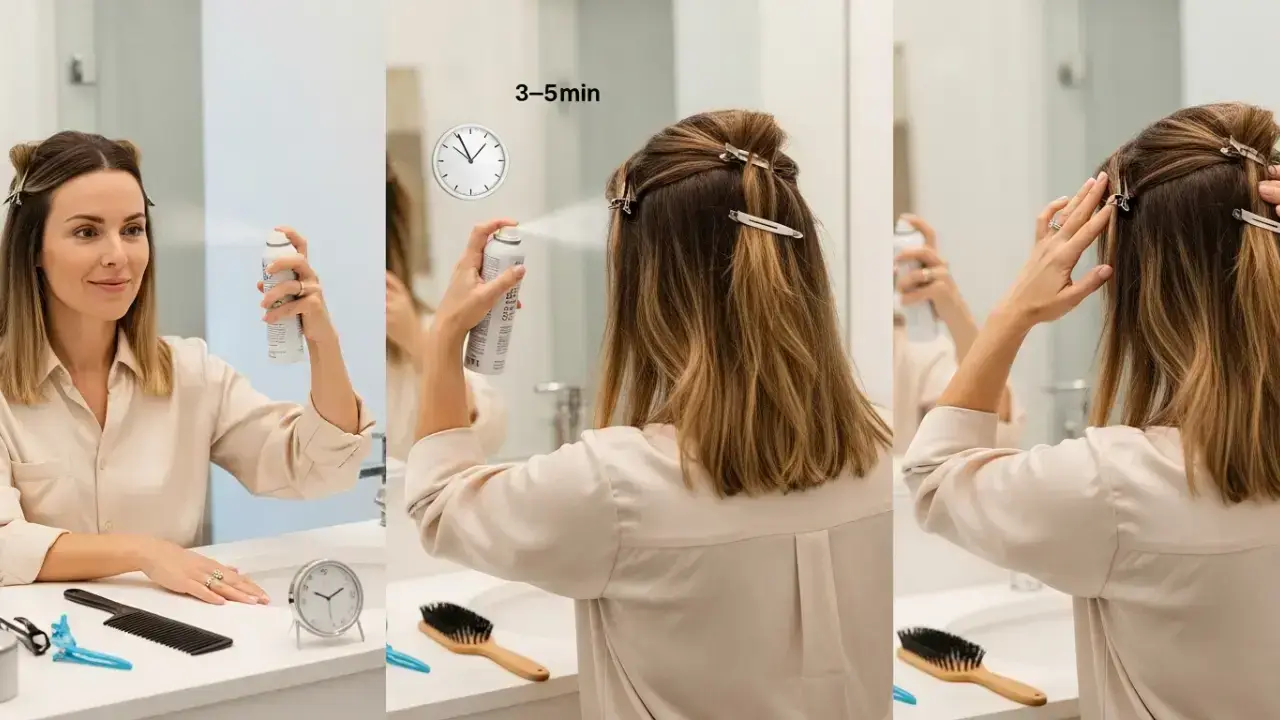
The Most Misunderstood Part: Application Technique
Now, here follows the portion which most people misunderstand—application technique. You cannot simply spritz and start instantly brushing. If you do, you will not obtain maximum benefits.
This is how it should be done:
-
Apply on dry hair only.
Dry shampoo should never be applied on wet or damp hair. -
Divide your locks in sections.
This is a gold step. Separate hairs with your fingers or a comb, paying more attention to the most oily areas (often the top, hairline, and temples). -
Place the can 6 to 10 inches away.
A very dilute spray is more effective than a concentrated one. -
Spray in short, shaky bursts.
Do not disperse all the emphasis in one place. When powder is used, apply it lightly at the roots. -
Wait 3–5 minutes. Let it sit.
This is not an instant fix—the product needs a moment to absorb the oil. -
Finger massage.
Just as you would with wet shampoo. This step assists in even distribution of the product. -
Paint-brush or blow-dry finish.
If you’d like more volume, turn your head upside down and use a blow dryer for extra lift.
You are not finished yet—but you are certainly on the right track.
The Timing Secret: When to Use Dry Shampoo
Most individuals wait until their hair is already oily. But did you know that dry shampoo works even better as a preventative measure?
Apply it before bed. As your scalp produces oil overnight, the dry shampoo will absorb it before it becomes visible. You’ll wake up to fresher-looking roots and more volume.
It’s one small change that can add an extra day (or two) between washings. In fact, this is one of the most recommended hacks by top hairstylists, including names like Living Proof and Redken.
Things to Avoid: What Not to Do With Dry Shampoo
Dry shampoo may seem foolproof, but there are common mistakes that can ruin your results. So, what should you avoid?
-
Spraying too close together:
This leads to uneven color and visible white spots. -
Overuse:
Can create buildup, stiffness, and dullness. -
Skipping the wait time:
The product needs a few minutes to absorb oil. Rushing reduces its effectiveness. -
Failing to massage it in:
Without working it in, it just sits on top of the hair without blending in. -
Excessive use between washes:
When used too often without cleansing, it can clog pores and inhibit healthy hair growth.
So, if you’ve ever asked yourself: “Why is my dry shampoo not working?” — these might be the reasons.
What Is the Maximum Length of Time You Can Go Between Washing?
Professionals suggest applying dry shampoo no more than twice between washes. Go a step further, and you may end up with itchiness, buildup, and a flaky scalp.
What is aimed at is not replacement, but refreshment.
When Dry Shampoo Doesn’t Seem to Work
If your roots still remain greasy after using dry shampoo, consider the following:
-
Have I used too much or too little?
-
Did I massage it in after waiting the proper amount of time?
-
Is it the appropriate formula for my hair type?
These are small adjustments that can solve the issue—no need to reapply or over-wash.
The Volumizing Perk: Not Just Clean Hair—Better Hair
One great advantage of using dry shampoo, besides removing oil, is volume. If your hair falls flat a day or so after styling, this may be your hidden fix.
To maximize volume:
-
Use dry shampoo at the roots and crown.
-
Leave it to sit for a few minutes.
-
Massage with your head flipped upside down.
-
Lightly brush or blow-dry for lift.
This trick works wonders to revive a blowout, fluff up a second-day ponytail, or re-style buns with bounce.
Most Effective Places to Apply (And Where Not To)
You may be tempted to spray your entire scalp—don’t. Dry shampoo is most effective when targeted at the greasiest areas.
Focus your application here:
-
Hairline: Especially near the forehead and ears.
-
Crown of the head: Grease often builds here first.
-
Part lines: Especially if you wear your hair in the same part daily.
💡 Avoid overusing on the mid-lengths and ends. These areas typically don’t get oily and may dry out or become brittle if overloaded with product.
Know Your Ingredients: What’s Inside Dry Shampoo?
Have you ever glanced at your dry shampoo label? The most common oil-absorbing ingredients include:
-
Rice starch: Lightweight and great for fine hair.
-
Clay (kaolin or bentonite): Powerful oil absorbers.
-
Charcoal: Clarifies and detoxifies the scalp.
-
Alcohols: Help the product dry quickly, but can be drying with overuse.
If you have sensitive skin or a flaky scalp, choose dry shampoos without silicones and sulfates. Look for clean-label products designed to minimize buildup and irritation.
Revolt Midday Without Overload
Even on days when you’re heading out after a hectic schedule and don’t have time for a shower, dry shampoo can still come to the rescue—though not to its full extent.
Try this minimalist midday refresh:
-
Use a mini travel-size version of your dry shampoo.
-
Flip your head down and apply only to visible roots.
-
Massage it in using fingertips, not nails.
-
Brush gently or shake out excess with your hands.
In under a minute, you’ll walk away with a cleaner appearance—without touching water.
After-Application Style Hints
So you’ve sectioned, sprayed, waited, and massaged like a dry shampoo pro. What’s next?
Here’s how to style smart after application:
-
Use your styling tools. Want volume? Flip your head upside down and blow-dry the roots with a cool setting for 30 seconds. This not only helps raise flat strands but also distributes the product evenly.
-
Dry shampoo and updos are a match made in hair heaven. Messy buns, ponytails, half-ups, and textured braids all benefit from the added grip and texture dry shampoo provides. Styles hold longer and look more intentional.
-
Avoid using heavy serums or oils afterward. These will undo the oil absorption and reintroduce greasiness.
-
If your ends feel dry, apply a light hold leave-in conditioner sparingly—only to the ends, never at the roots.
Choosing Dry Shampoo by Hair Color
One of the most common complaints about dry shampoo? White, chalky residue—especially noticeable on darker hair.
Here’s how to choose based on your hair color:
-
Blonde hair: Most traditional formulas work well. Some even brighten light shades.
-
Brunette or black hair: Choose tinted dry shampoos that blend into dark roots. Look for labels that say brunette-specific, dark tones, or color-adapt technology.
-
Red hair: Opt for transparent formulas or those made specifically for redheads. Otherwise, you’ll risk that powdered look.
💡 Pro Tip: Always test in a small area first. If you notice visible residue, pat it out gently with a towel or blend it in with a bristle brush.
Dry Shampoo and Curly Hair
Curly-haired folks, you’re not left out. The secret is using a product that doesn’t mess with your texture.
Opt for non-aerosol powders that let you apply product directly to the scalp using your fingertips or a puff applicator. Avoid brushing through curls—instead, massage at the scalp and let your natural shape do the rest.
Some curl-safe options even include hydrating ingredients like aloe or oat extract to soothe dryness without weighing curls down.
The Best Times to Use Dry Shampoo

Curly Hair and Dry Shampoo
Curly-haired folks are not forgotten. The trick? Don’t use a product that’s too harsh on your texture.
Choose non-aerosol powders, which allow you to apply product directly to the scalp using your fingertips or a puff applicator. Do not brush through the curls—just massage into the scalp and leave your natural shape alone.
Some curl-friendly options even include hydrating ingredients like aloe or oat extract that help moisturize without weighing down your curls.
When Dry Shampoo Shines the Brightest
Besides the tip of applying dry shampoo at night (a total game changer), here are the times when dry shampoo becomes your styling MVP:
-
After the gym: Apply before your workout to absorb sweat as it forms.
-
Before a party: Boost texture and volume before going out.
-
Post-blowout: Extend the life of a salon style by keeping roots grease-free.
-
Travel days: Fewer showers? No time? This is your low-maintenance lifeline.
Signs You Might Be Using Too Much Dry Shampoo
Dry shampoo is a lifesaver—but overuse can backfire.
Watch out for these signs:
-
Itchy, scaly scalp
-
Persistent white residue
-
Lifeless or brittle strands
-
Heavy buildup near roots
If you notice any of these, take a break. Use a detoxifying or clarifying shampoo once a week to reset your scalp.
Home Remedies to Store-Bought Dry Shampoo
If you’re ingredient-conscious or just enjoy a DIY approach, here are some natural alternatives:
-
Cornstarch: Great oil absorber for light hair
-
Cocoa powder: Perfect for dark hair—mix with cornstarch to tone down color
-
Arrowroot powder: Gentle and effective on all hair types
-
Kaolin clay: Strong oil control for oily or thick scalps
How to apply:
Use a clean makeup brush to apply at the roots. Let sit for a few minutes, then massage in and brush or shake off excess. These DIYs are especially useful if you want to avoid aerosols or synthetic fragrances.
How to Use Dry Shampoo While Caring for Your Scalp
The roots of healthy hair start at the scalp. If dry shampoo is part of your regular routine, don’t skip scalp care.
-
Exfoliate weekly: Use a scalp scrub or detox shampoo.
-
Hydrate: Always condition on wash days, focusing on the ends.
-
Massage: Boost circulation and loosen buildup with gentle finger massage.
-
Don’t scratch: If it itches, reduce frequency or switch products.
Remember: Dry shampoo is a feature, not the star. It should support a good haircare routine—not replace it.
Conclusion
To be perfectly honest, I used to consider dry shampoo a cheat-day product. But once I learned the proper method and found the right formula for my hair, everything changed.
Now I can extend a blowout, bounce back after a workout, or travel light—without greasy roots ruining the vibe. My game-changing tip? Applying it at night instead of the morning. By sunrise, my roots are cleaner and lifted.
Dry shampoo isn’t a savior, but if you stop treating it as a shortcut and start using it as a care tool, it becomes a real asset in your hair routine.