


We have all been there — head scratching to our black shirt collar with the white flakes, an itchy scalp which we cannot coil, and the fear that somebody might notice the dandruff and you are yet to realize it.
The issue of dandruff is a relatively prevalent one when it comes to hair and scalp, yet a solution to it, which would be effective, is like trying to find a unicorn.
You spend most of your money on shampoos that claim to produce miracle results but instead make you have a dry or irritated scalp — or worse still, your head flakes.
But what could be better than the answer to this dilemma is close to nature?
And having been considering whether the natural treatments of dandruff work, you are not the only one.
There has been the increase in numbers of people abandoning the fierce chemicals and going to their kitchens and gardens to find solutions — and the outcome has been positive. This blog goes to the bottom on all those natural solutions to dandruff that are not mere folk legends, but have a science and a tradition of hundreds of years behind them.
So, What Brings About Dandruff?
Put on the brakes before leaping into the reparatives: there is more to dandruff than a dry scalp. It may attack individuals who are having oily scalps as well.
The most frequent of them is yeast-like fungus known as Malassezia which grows on the scalp normally. In others, the fungus develops out of control and causes inflammation, resulting in itching along with flakes. To that, add factors such as:
-
Dry skin in winter seasons
-
Oily skin and overproduction of sebum — that make yeast thrive on it!
-
Hair products allergy (or sensitivity; called contact dermatitis in expert terms)
-
Skin disorders such as seborrheic dermatitis, eczema or psoriasis
-
Flare-ups may be induced by stress, dietary and hormonal changes, etc.
It is important to have the knowledge of your own root cause because it enables you to select the correct treatment.
Dandruff is not one-size-fits-all, and nor should your solutions be.
The Reasons Why People Are Resorting to Natural Treatments
At any beauty aisle, at least hundreds of anti-dandruff shampoos are available that are full of ingredients such as zinc pyrithione, selenium sulfide or ketoconazole. Yes, although they may be effective on some, on others they may dry the scalp, cause product build-up, or even further irritation.
That is where natural remedies are introduced.
They are kinder, holistic, and usually multipurpose. Not only are you covering up the flakes, you are feeding the skin, cooling the inflammation, and you are restoring the environment that caused the problem in the first place.
In addition to that, most of these therapies are so cheap and simple to apply at home.
Medications That Work (and Don’t) in Nature — and Why
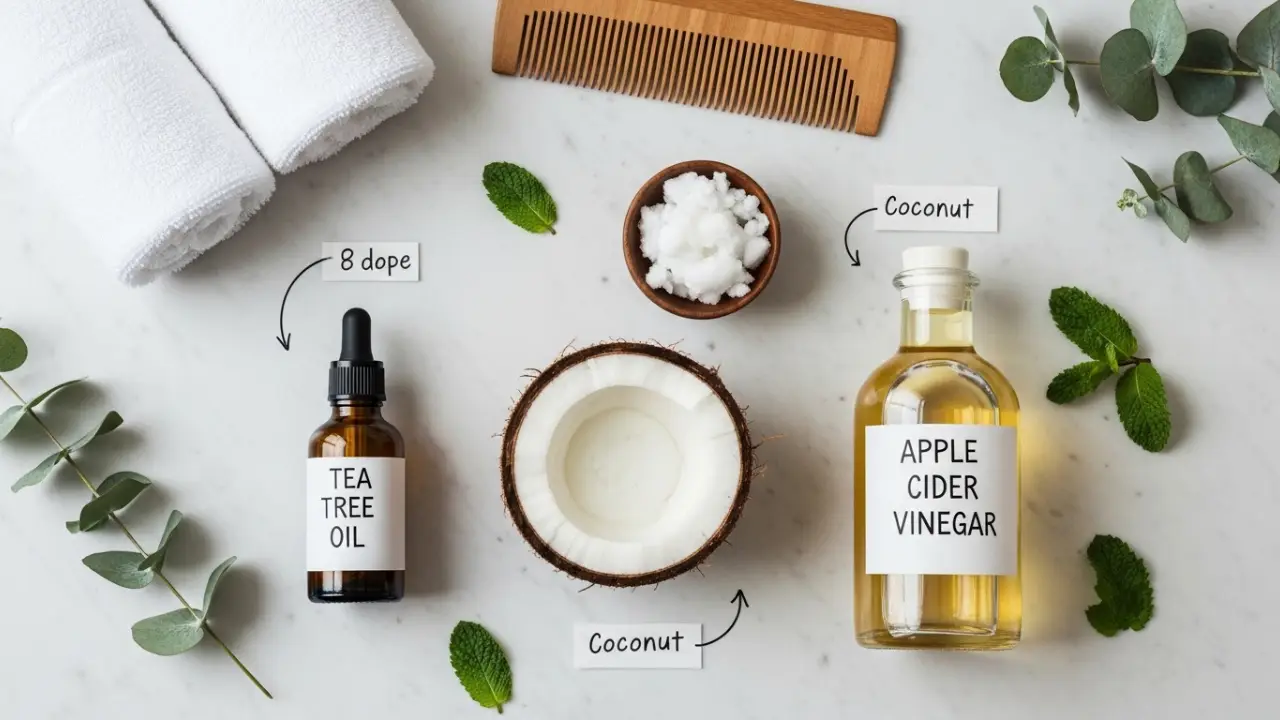
To begin with, we should dissect the solutions with the actual outcomes in the real world. Chances are that you might already have heard about some of them, but now, we will actually tell you how to use them effectively, without being caught by the myths of Pinterest.
1. The Anti-Fungus Hydrogen Hero: Tea Tree Oil
It is well known that tea tree oil was well known due to its effects, which were antifungal, antibacterial, and anti-inflammatory. It focuses on the overgrowth of Malassezia, but at the same time relieves the symptoms of itching and redness.
Use:
-
Do not use it painfully.
-
Mix 2–3 drops with a tablespoon of coconut or jojoba oil.
-
Apply to concaved areas of your scalp and leave after 20 to 30 minutes.
-
Rinse with a sulfate-free and mild shampoo.
Use two times a week is enough. Always do a patch test beforehand, as it is very strong.
2. Moisture + Antifungal Combo: Coconut Oil
Coconut oil is not only used as a hair softener. It has antifungal properties in lauric acid, and it does a fabulous job of binding moisture, so it is ideal in the case of dandruff brought about by dryness.
Use:
-
Reheat a little in your hands or under a microwave.
-
Apply it to your scalp and leave for at least 30 minutes or even overnight to allow deep hydration.
-
Rinse out using a mild shampoo.
In drier climates, the itchiness and flaking can be significantly decreased by using it 2 or 3 times weekly.
3. Non-Drug-Based Beverage: Apple Cider Vinegar (ACV) Scalp pH Balancer
ACV is a savior in the natural health circles; it can help in balancing the pH of your head and is an inhibitor of fungus. It is also a mild exfoliant, washing out and removing dead skin cells, which accumulate.
Use:
-
Take equal parts ACV and water in a spray bottle.
-
Apply on the head after shampooing, wait 5 to 10 minutes, and rinse.
-
It is also possible to apply it as a pre-wash scalp therapy.
Pro-tip: Do not apply ACV on irritated or broken skin — it burns.
Once a week is a good place to start.
4. A Cooling Balm for Itchy, Scaly Scalps: Aloe Vera
Angry, red, or itchy scalp? Aloe vera may be your cup of tea. It has an anti-inflammatory effect and anti-microbial properties; it can also be used to moisturize dryness and calm itchiness.
Use:
-
Take fresh aloe vera gel, if possible — right from the plant.
-
Apply to the scalp, leave in for 30–45 minutes, and rinse with warm water.
-
Repeat 2–3 times weekly.
You can also mix aloe with coconut oil or a few drops of tea tree oil to create a stronger scalp mask.
5. Baking Soda – A Gentle Exfoliant That Yields Quick Results
Baking soda can assist in the removal of dead skin and can assist to decrease the yeast on the scalp. However, it is highly alkaline and cannot be tolerated by all persons.
Use:
-
Moisten your head a little.
-
Apply a little (1 tablespoon) of baking soda on your scalp, rubbing it around in circles.
-
Leave it alone for 1–2 minutes and wash it well.
Note: It should never be used regularly — no more than once a week — as this can disturb the natural barrier of your scalp.
6. Lemon Juice – The Refreshing Antifungal
Lemon juice is antifungal and it is effective on oily scalp. It is also useful in the destruction of the dead skin cells that result in flaking. But it is acidic and it may be harsh.
Use:
-
Blend together 1 tablespoon of lemon juice and two tablespoons of water.
-
Apply to scalp, leave for 5 minutes, and rinse.
Caution: Do not apply prior to sun exposure — it may lighten the hair and irritate the skin.
7. The Secret Weapon of Ayurveda: Neem Leaves
Neem leaves are known to block the growth of fungus, bacteria, and inflammation; they have been used in Ayurvedic medicine over centuries. They especially work well when you have dandruff caused by infection or sensitivity of the scalp.
What to Do:
-
A handful of neem leaves must be boiled in water and allowed to cool.
-
Strain the water and apply it as a scalp rinse.
-
You can also grind the boiled leaves into a paste to act as a mask.
Using neem treatment twice a week can show visible improvements.
Bringing It All Together: A Case-and-Point Natural Dandruff Regimen
Another way that will help is to form a routine on how you protect your scalp depending on your hair type and how you lead it. Rather than being desperate and attempting all the solutions simultaneously, you need to create a routine in relation to the nature of your scalp and your way of life.
Here’s an easy week-long plan to start with:
-
Monday: Tea tree oil massage + coconut oil massage
-
Wednesday: Aloe vera scalp mask
-
Friday: Post-shampoo ACV rinse
-
Sunday: Rinse with neem water or apply a mask of yogurt and honey
This allows your scalp to respond gradually, without being overwhelmed.
Remember: Don’t expect miracles within 12 hours to 2 days. Like any skin care routine, natural remedies need consistency.
Errors to Be Avoided With Natural Remedies
Most individuals abandon natural treatment based on misuse. The following are some of the things to remember:
-
Excessive use of acidic substances such as lemon and vinegar will dry and even burn your scalp.
-
Never fail to do a patch test against a new component, particularly essential oils.
-
Do not mix several remedies simultaneously; there is a risk of neutralizing some components and even irritating the skin.
-
Do not leave your brushes, pillowcases, and hair accessories without cleaning, as they also may transport dandruff-causing microbes.
Creating a Long-Term Natural Routine That Will Really Work
The greatest integration error that individuals make when treating dandruff naturally? They don’t do it twice. They expect instant results and assume it’s ineffective when they don’t get them.
Natural remedies are time taking. Your scalp needs several weeks to readjust and rebalance.
So here’s what you need: a routine that fits your lifestyle rather than fights it.
7-Day Natural Scalp Care Plan (Customizable)
Day 1 – Pre-wash Treatment
-
Mix 2 drops of tea tree oil with some warm coconut oil.
-
Massage into scalp for 10 minutes, leave for 30 minutes to overnight.
-
Shampoo with a soft herbal shampoo.
Day 2 – Hydration Mask
-
Mix aloe vera gel + 1 tsp of honey.
-
Rub directly on the scalp, leave for 30–40 minutes, and wash off with cool water.
Day 3 – Rinse Scalp
-
Use ACV with water (1:1 ratio).
-
Apply after shampoo, leave for 10 minutes, then rinse with cold water.
Day 4 – Off Day
-
No treatment.
-
Let your scalp breathe and oxygenate.
Day 5 – Neem Water Rinse
-
After shampooing, use boiled and cooled neem water as a final rinse.
Day 6 – Meal Pack
-
Mix yogurt + crushed fenugreek paste + juice of half a lemon.
-
Apply to scalp and hair, leave for 45 minutes, then rinse.
Day 7 – Massage & Brush Check
-
Observe for flaking, itching or tenderness.
-
Use a very soft bristle brush to help increase circulation and gently exfoliate.
Guidelines on Getting the Best Out of Natural Treatment
To maximize the benefits of natural dandruff remedies, consistency and care matter. Follow these essential practices:
-
Use lukewarm water, not hot – hot water dries the scalp and may increase flaking.
-
Don’t overwash, especially with oil-stripping shampoos.
-
Keep hair tools clean – wash pillowcases, brushes, and combs at least once a week.
-
Massage instead of scratching – while scratching may feel relieving, it aggravates and irritates the scalp.
-
Hydrate and nourish from within – drink plenty of water and eat healthy fats like avocado, nuts, and olive oil. Scalp health starts inside.
Store-Bought Natural Products When Natural Remedies Need a Boost
Sometimes, you don’t have the time (or patience) to mix your own masks and oils. Thankfully, today’s market offers a variety of store-bought natural dandruff products that combine herbal ingredients with professional-grade formulations.
Key Ingredients to Look For:
-
Tea Tree Oil
-
Neem Extract
-
Apple Cider Vinegar
-
Aloe Vera
-
Rosemary Oil
-
Witch Hazel
-
Zinc PCA – a gentle, natural sebum-balancing ingredient
Recommended Natural Anti-Dandruff Products:
-
Khadi Herbal Neem and Aloe Shampoo – Gentle, effective, Ayurvedic.
-
JASON Sulfate-Free Pure Tea Tree Oil Shampoo – Cleanses without harsh ingredients.
-
WOW Skin Science Apple Cider Vinegar Shampoo – Ideal for oily scalps.
-
SheaMoisture African Black Soap Shampoo – Moisturizing and soothing.
⚠️ Check the label: Avoid products containing sulfates, parabens, and synthetic fragrances. Even “natural” products can hide irritants.
The Difference Between Dermatologists and Ayurvedic Practitioners

Sometimes, there’s a divergence between modern medical science and traditional natural wisdom. But both offer valid and valuable insights into scalp care.
Dermatologists’ Perspective:
-
Mild to moderate dandruff is often treatable at home.
-
The Malassezia fungus is usually the cause; antifungal agents (natural or medical) are most effective.
-
If flakes are thick, yellow, or extremely itchy, it’s time to see a doctor.
-
Be alert for signs of seborrheic dermatitis or psoriasis disguised as dandruff.
Ayurvedic Practitioners’ Perspective:
-
Dandruff often stems from imbalance of pitta or vata doshas.
-
Diet plays a major role – spicy food, alcohol, and fried food can overheat the scalp.
-
Remedies like amla, neem, bhringraj, and brahmi oil treat symptoms and restore internal balance.
Dandruff and Diet: What You Consume Reflects in Your Scalp
Now that we’ve talked about external treatments, it’s time to spotlight what’s happening internally—because scalp health starts from within.
Dandruff can be triggered or worsened by poor diet, dehydration, or nutritional deficiencies. What you eat shows up not only in your skin but also in your scalp.
Foods That Help Fight Dandruff:
-
Omega-3 fatty acids (e.g., salmon, flaxseeds, walnuts) – Reduce inflammation and nourish the scalp.
-
Zinc-rich foods (e.g., pumpkin seeds, chickpeas) – Essential for skin regeneration and immune support.
-
B-complex vitamins (e.g., whole grains, bananas, eggs) – Improve hair and scalp strength.
-
Hydrating fruits and vegetables (e.g., cucumber, watermelon, leafy greens) – Boost scalp hydration from the inside out.
Foods That Can Worsen Dandruff:
-
Sugary snacks – Feed the yeast that contributes to dandruff.
-
Processed and fried foods – Increase oil production and inflammation.
-
Dairy and gluten – May trigger sensitivity-related flare-ups in some individuals.
-
Excess alcohol and caffeine – Dehydrate your body and scalp.
Also, drink plenty of water daily, and avoid crash diets or extreme fasting, which can disrupt hormonal balance and oil regulation on the scalp.
When Natural Remedies Aren’t Enough
Let’s be real — natural remedies are powerful, but they aren’t a universal fix. If you’ve been on a consistent routine for 4–6 weeks and still notice the following:
-
Thick, crusty flaking
-
Oozing sores or bleeding patches
-
Hair thinning or bald spots
-
Persistent redness, itching, or burning
…it may be time to see a dermatologist. You could be dealing with something more serious, such as:
-
Seborrheic dermatitis
-
Scalp psoriasis
-
Fungal scalp infections
-
Allergic reaction to hair products
Reminder: Don’t avoid seeking medical help just to stay “natural.” Early intervention is always better than letting the condition escalate.
Natural Does Not Mean Immediate—But It Means Sustainable
One of the biggest myths surrounding natural remedies is the idea that they are weak or take too long to work. Yes, they may be milder and slower compared to prescription treatments—but they also come with fewer side effects, and in the long term, they help you build a healthier, more balanced scalp.
With patience and persistence, natural treatments often lead to lasting results. In fact, many people have had better outcomes sticking to natural remedies than with harsh chemicals that provide a quick fix—only to have the issue return, worse than before.
My Opinion
You don’t have to settle for living with flakes, itchiness, or using harsh shampoos that strip your hair.
Nature offers more than a temporary fix—it offers a path to balance, not just symptom-masking.
Every time you choose to switch to a natural shampoo, apply a neem rinse, or soothe your scalp with an aloe vera mask, you’re making a decision to care for your body in a gentler, slower, but far more sustainable way.